
Board and Care Homes vs Large Communities in San Diego: An Honest Comparison
Quick answer: In San Diego, six-bed board and care homes typically cost $5,500 to $9,500 monthly, while larger assisted...


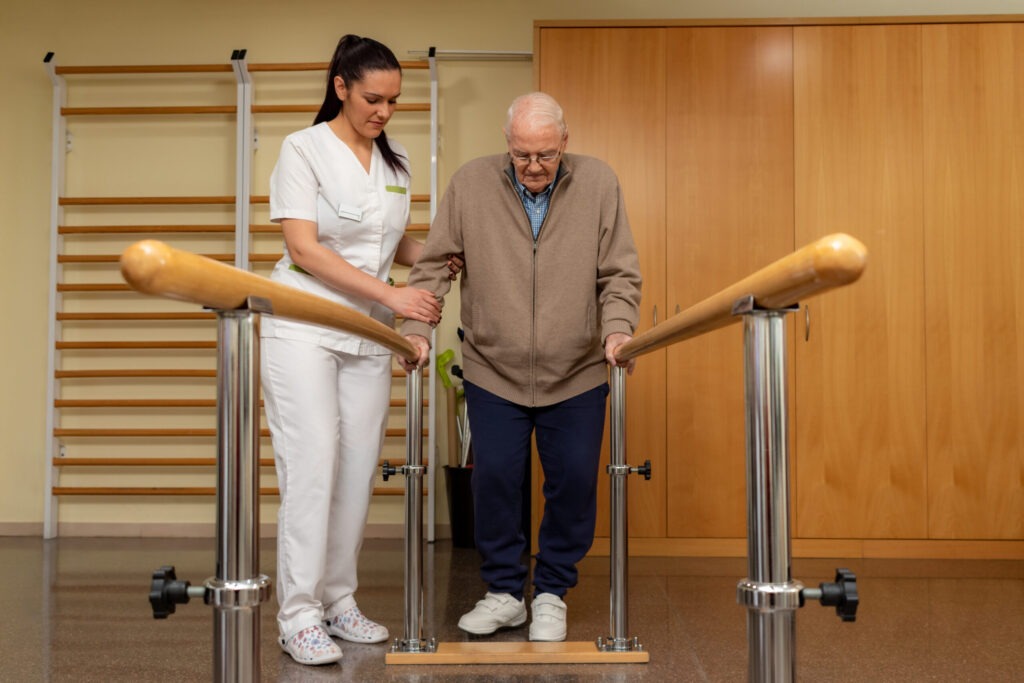
Physical therapy is known for helping people with injuries and pain get back on their feet, figuratively and literally. For older adults, it can be the difference between walking to the dining table and needing a wheelchair. This guide explains how physical therapy in assisted living works in San Diego, including board and care homes and memory care, who provides it, how Medicare pays for it, and simple fall prevention exercises your parent can do with a therapist’s approval.
As we get older, we may have more aches and pains, and with them often comes a loss of strength, balance and mobility. Without the right care, these limits can stay with a person for years and lead to falls, fear of walking and less independence. Physical therapy in assisted living helps residents overcome pain and mobility problems so they can live more comfortably and safely.
Physical therapy can help a resident:
Even small gains matter. A resident who can stand and pivot with one caregiver instead of two may be able to stay in the home they love, at a lower care level.
Yes, but usually not with their own staff. In California, assisted living communities, memory care communities and board and care homes are licensed as Residential Care Facilities for the Elderly (RCFEs). They provide personal care and supervision, not skilled therapy. Physical therapy is brought in from outside, most often in one of three ways:
Many large assisted living communities in San Diego partner with a therapy provider that comes on site. Small board and care homes in San Diego rarely have a therapy room, but therapists visit residents there all the time. You can usually choose the agency or therapist, as long as they accept your parent’s insurance.
If your parent needs therapy away from the home, ask whether the community provides transportation to appointments and whether there is a fee. Many small homes help families arrange rides rather than providing them.
Medicare does not pay for assisted living itself, but it does cover medically necessary physical therapy for residents, just as it would at home.
Home health therapy. When a doctor certifies that your parent is homebound and needs skilled therapy or nursing, Medicare covers home health visits in the assisted living or board and care home. For Original Medicare, covered home health services have no copay. Home health is common after a hospital or skilled nursing stay.
Outpatient therapy under Part B. If your parent is not homebound, Medicare Part B covers outpatient physical therapy, whether at a clinic or by a therapist who visits the care home. After the Part B deductible, your parent usually pays 20% of the Medicare-approved amount, which a Medigap plan may cover.
Therapy to maintain abilities. Under the Jimmo v. Sebelius settlement, Medicare cannot deny skilled therapy just because a person is not improving. Therapy can be covered when it is needed to maintain function or slow decline, which matters for residents with Parkinson’s, multiple sclerosis or dementia.
Medicare Advantage plans cover the same types of therapy but may require prior authorization and in-network providers. Always ask the therapy provider to confirm coverage before starting.
A common path for San Diego seniors goes like this: a fall or illness leads to a hospital stay, then a short rehab stay in a skilled nursing facility, then a move home or into a care home with home health therapy to finish recovery. Our page on nursing homes in San Diego explains short-term rehab.
For example, imagine a hypothetical 84-year-old woman in Clairemont who breaks her hip. After surgery and two weeks of rehab in a skilled nursing facility, she is not safe to return to her two-story house. Her family moves her to a six-bed board and care home nearby, and a home health agency sends a physical therapist twice a week for several weeks. Because the home’s caregivers have only a few residents, they help her practice her exercises every day between visits. Within two months she is walking to meals with a walker.
Both settings can support therapy well, but in different ways:
In 2026, board and care homes in San Diego usually cost about $5,500 to $9,500 per month, assisted living about $5,500 to $12,500, and memory care about $7,500 to $14,000. Therapy itself is usually billed separately to Medicare or other insurance, not included in the monthly rate.
Ask your parent’s doctor about a physical therapy evaluation if you notice:
Our guide to warning signs your parent needs senior care covers other changes to watch for.
Fall prevention exercises are some of the most valuable routines seniors can learn, because falls are a leading cause of injury in older adults. The video below, from physical therapists, shows several balance exercises. Before starting any exercise program, ask your parent’s doctor or physical therapist which exercises are safe for them, and always have a sturdy chair or a caregiver nearby.
This is shown in the video above. Stand between two sturdy chairs and hold one with each hand for balance. Slowly march in place, lifting one foot for a moment, then the other. Do not push past what feels safe, since everyone’s limits are different. This exercise helps with balance and mobility for anyone who struggles with steadiness.
Using the same chair and position, balance yourself and stand on one leg for 15 to 20 seconds at a time. Stand up straight and center your weight over the standing leg. This builds strength in the hips and legs, making it easier to walk without losing balance.

Place a small, stable step stool on the floor in front of you and make sure it cannot slip. Holding a chair or rail at your side, step up onto the stool with one foot, then the other, then step down again. Place your entire foot on the stool each time. This exercise helps prevent falls on stairs and curbs.

A therapist may visit two or three times a week, but progress happens on the other days too. Families can help by:
When therapy ends, ask the therapist what your parent should keep doing to hold on to their gains, and ask the care home to add it to the service plan.
If your parent needs a safe place to recover or to keep their mobility, Elder Answers can help you find assisted living or a board and care home in San Diego that works well with therapists. Our advisors personally visit the homes we recommend and know which ones support residents after falls, fractures and hospital stays. Our senior care placement service is free because care homes pay us after move-in, and the rate your family pays does not change. When the need is urgent, such as a hospital discharge, many families tour and move within a few days. Contact Elder Answers to talk with a local advisor.
Yes. Home health agencies and outpatient therapists regularly treat residents in assisted living communities, memory care and board and care homes. The care home does not usually employ the therapist, so ask which providers visit and confirm coverage with your parent’s insurance.
Yes, when therapy is medically necessary. Medicare covers home health therapy for residents who are homebound and outpatient therapy under Part B for those who are not. Original Medicare home health visits have no copay, while Part B outpatient therapy usually carries 20% coinsurance after the deductible.
Not automatically. Under the Jimmo v. Sebelius settlement, Medicare can cover skilled therapy needed to maintain function or slow decline, not only to improve. Coverage still depends on the therapy being reasonable, necessary and requiring a therapist’s skills.
Yes. Therapists visit board and care homes in San Diego every day. Because these homes have only about six residents, caregivers can often help residents practice their exercises between therapy visits.
Usually not. The monthly rate covers room, meals, personal care and supervision, while therapy is billed separately to Medicare, Medicare Advantage or other insurance. Ask the community whether any group exercise classes are included.
It varies. Many residents receive therapy a few times a week for several weeks after a fall or fracture, then continue with a home exercise program. The therapist will set goals and update the doctor on progress.
Yes. Therapists experienced with dementia use simple instructions, demonstration and routine to help residents walk, transfer and stay active more safely. Short, regular sessions and caregiver involvement tend to work best.
Make sure they are checked by a doctor, then ask whether a physical therapy evaluation is needed. Request a care conference to update the service plan with any new safety steps, such as a walker, a bed alarm or more help at night.
Our physical health is one of the most important things we have, especially as we age. It is vital that older adults keep moving and maintain enough strength and balance to get around as safely and independently as possible. Physical therapy in assisted living is a proven tool that helps seniors in San Diego recover after setbacks, prevent falls and stay active in the home they choose. If you are looking for a home that supports your parent’s mobility, a free consultation with Elder Answers is a good first step.
Quick answer: In San Diego, six-bed board and care homes typically cost $5,500 to $9,500 monthly, while larger assisted...
The first question most families ask when a parent needs more help is simple: what will this cost? In...

When a parent can no longer live safely alone, most San Diego families start by searching for assisted living....

Finding assisted living for a parent or loved one can feel overwhelming. You're navigating unfamiliar terminology, comparing costs across...