
Dialysis in Assisted Living: What Families Need to Know
Quick answer: Many people on dialysis can live in assisted living or a board and care home, especially those...
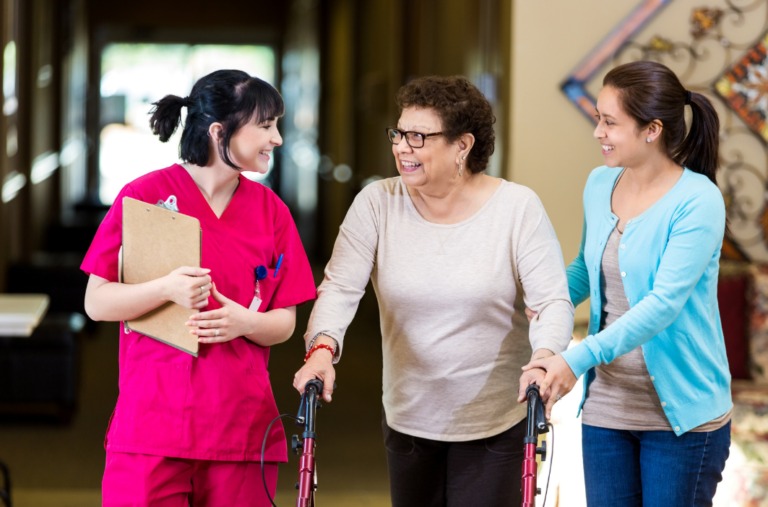

One fall is a warning. Repeated falls are a message. When a parent falls again and again, families usually try grab bars, a medical alert button and a few hours of home care. Sometimes that is enough. Often it is not, because the real problem is that nobody is there at the moment a parent stands up at 3 a.m. This guide explains when elderly falls mean 24 hour care is the safer choice, what 24-hour supervision looks like in San Diego, and how board and care homes, assisted living and in-home care compare for a parent who keeps falling.
For practical ways to make a house safer, see our senior safety tips for the home. This guide picks up where home safety fixes stop working.
Repeated falls usually mean a parent needs 24-hour supervision when falls happen at night, when your parent cannot get up or call for help, when dementia makes them forget their walker or limits, or when falls keep happening despite home safety changes and therapy. At that point, the risk is no longer the floor. It is being alone.
Elderly falls that point toward 24 hour care often share one or more of these features:
Our broader guide to warning signs a parent needs senior care lists other signals that often show up at the same time.
Before deciding on a move, ask the doctor to look for causes. Falls in older adults often come from medications, low blood pressure on standing, urinary urgency, vision problems, weakness, foot pain, infections or dementia. Treating a cause can reduce falls, but if the main cause is cognitive or progressive, supervision becomes the real fix.
Questions to raise with your parent’s doctor:
That last question is the turning point for many families. A parent who can learn to use a walker every time and press a button when they fall may manage at home with support. A parent who cannot remember those steps needs another person present. Our guide to questions to ask your parent’s doctor before a senior care move can help you prepare for this appointment.
24-hour supervision means a trained person is present and able to respond around the clock, including overnight. It does not mean someone stares at your parent every minute. It means help is close enough to reach your parent quickly, check on them through the night and assist with every risky transfer, such as getting up to use the bathroom.
There are a few ways to get it:
The detail that matters most for falls is overnight coverage. Many falls happen at night. Ask any provider whether the night caregiver is awake or sleeping on call. California requires RCFEs with fewer than 16 residents to have an awake night staff person when a resident with dementia needs awake night supervision based on the home’s appraisal (Title 22 Section 87705). For a parent who falls at night, insist on awake overnight staff.
Board and care homes in San Diego are often a strong fit for seniors who fall because caregivers are close by in a single-story house, usually with 1 to 2 staff for 6 residents. The bathroom is steps from the bedroom, there are no long hallways or elevators, and caregivers learn each resident’s habits, such as when they usually get up at night.
What a good board and care home does for a resident who falls:
An honest note: no care setting can prevent every fall. California protects residents’ right to move freely, and homes cannot restrain a resident to stop falls. Bed rails and other postural supports have specific rules under Title 22 Section 87608. What a good home can do is reduce risk, respond fast and catch injuries early.
In 2026, board and care homes in San Diego typically cost about $5,500 to $9,500 per month, with care included. Our family guide to board and care homes in San Diego explains how these homes work.
Assisted living can work for a parent who falls occasionally but is otherwise independent and uses a call button reliably. For a parent who falls often, forgets to call for help or falls at night, the larger layout and lower staff-to-resident ratio can be a problem. Memory care fits when falls come with dementia and wandering.
In assisted living, your parent typically lives in a private apartment. Staff check in on a schedule and respond to pendants or pull cords. That works if your parent uses the button. It works less well for someone who stands up quickly without thinking, or who falls and lies quietly because they are confused. Ask how often night staff check on residents, and how long the average call-light response takes. In 2026, assisted living in San Diego typically costs about $5,500 to $12,500 per month, often with care fees added. See our guide to assisted living in San Diego.
In memory care, staff are trained for dementia, and the environment is designed for safety. Memory care in San Diego typically costs about $7,500 to $14,000 per month in 2026, while small dementia board and care homes typically cost about $6,000 to $9,500. Our page on memory care facilities in San Diego covers both options.
24-hour home care keeps your parent at home with a caregiver always present, but in San Diego it usually costs more than a board and care home and depends on reliable staffing for every shift. A board and care home provides round-the-clock help as part of one monthly rate, plus backup staff when a caregiver is sick.
Things to weigh:
Our detailed comparison of an elder care home vs. 24-hour home care in San Diego walks through costs and tradeoffs. If your parent mostly needs help at night, see overnight care options for an elderly parent.
A fall that causes a fracture or head injury often leads to a hospital stay and then rehab in a skilled nursing facility. That rehab stay is the moment many families decide on 24-hour care, because the discharge planner will ask whether your parent can safely go home. Plan the next step early in the rehab stay.
What usually happens:
Start touring care homes in the first week of rehab, not the last day. Our guides to care options after a hip fracture and moving from skilled nursing to board and care walk through this transition.
When touring a senior care home for a parent who falls, ask how many caregivers are on duty at night and whether they are awake, how they learn each resident’s patterns, what fall alarms they use, how they report falls, and how many falls residents have had recently. Watch how caregivers help residents stand and walk.
Questions to ask:
What to notice on the tour: the walk from bedrooms to bathrooms, lighting in hallways, grab bars, non-slip floors, clutter, and whether caregivers stay close when residents stand. Ask to see the licensing history too. Citations involving falls, injuries or night staffing are worth asking about. Our guide to board and care tour red flags lists other things families miss.
Medicare does not pay for ongoing 24-hour supervision, whether at home or in a care home. Families usually pay privately with income, savings or home sale proceeds, and some use long-term care insurance, VA Aid and Attendance, or Medi-Cal programs such as the Assisted Living Waiver where a participating home has space.
Funding sources to look at:
Our 2026 San Diego senior care cost guide compares options side by side.
Elder Answers helps families who are worn down by fall after fall find residential senior care with real 24-hour support. We know which board and care homes in San Diego have awake overnight caregivers, single-story layouts and strong therapy partners, and which have openings now. Our advisors personally visit the homes we recommend.
Our help is free for families because care homes pay us after move-in, and that does not change your rate. We share information only with homes you choose. After a hospital or rehab stay, moves can often happen within a few days. Contact Elder Answers to talk with a local advisor.
There is no set number. The pattern matters more than the count. Falls at night, long lies on the floor, falls with dementia, and falls that continue despite therapy and home safety changes all suggest your parent needs someone present around the clock.
No. No setting can prevent every fall, and California protects residents’ right to move freely, so homes cannot restrain residents to stop falls. A good home reduces risk with supervision, assisted transfers, alarms and a safe layout, and responds quickly when a fall happens.
For many seniors who fall often, a board and care home is the better fit because caregivers are close by in a small single-story house, usually 1 to 2 staff for 6 residents. Assisted living can work for parents who fall rarely and reliably use a call button.
Some do and some have a caregiver sleeping on call. California requires awake night staff in homes with fewer than 16 residents when a resident with dementia needs awake night supervision. For a parent who falls at night, ask for a home with awake overnight staff.
Usually not. Around-the-clock in-home care in San Diego is billed by the hour for every hour, which often totals more than a board and care home. Board and care homes in San Diego typically cost $5,500 to $9,500 per month in 2026 with care included.
No. Medicare does not cover ongoing 24-hour supervision or custodial care. It may cover hospital care, a short skilled nursing rehab stay after a qualifying hospital stay, physical therapy and home health visits when your parent qualifies.
Staff check for injury, call 911 if needed, notify family and the doctor, and document the fall. California requires RCFEs to report serious injuries, as determined by the doctor, to licensing and the resident’s responsible person (Title 22 Section 87211). A good home also reviews what happened and adjusts the care plan.
Yes. Many board and care homes in San Diego specialize in dementia care, and the small setting often reduces falls. If your parent also wanders or tries to leave, look for a home with secured exits and awake night staff, or consider memory care.
Quick answer: Many people on dialysis can live in assisted living or a board and care home, especially those...

Quick answer: When a doctor recommends assisted living, memory care or 24-hour care, it usually means they see safety...

Quick answer: Smoking in assisted living in California depends on each facility’s written policy. Many communities and board and...

Quick answer: Jewish assisted living in San Diego and other faith-based senior living options offer care shaped by religious...