
Home Health in Assisted Living: Does Medicare Cover It?
Quick answer: Yes. Medicare home health in assisted living is covered when a resident is homebound, needs intermittent skilled...


Quick answer: Many San Diego board and care homes and assisted living communities have caregivers who speak Spanish, Tagalog, Vietnamese, Chinese, Korean, Farsi, Arabic and other languages. Finding a Spanish speaking board and care in San Diego, or a home in another language, can improve safety, comfort and dignity, especially for parents with dementia who lose their second language. Ask how many caregivers speak the language on every shift.
San Diego is one of the most diverse regions in California, and many older adults are most comfortable in the language they grew up with. When a parent needs assisted living or a board and care home, language and culture can matter as much as location or price. This guide explains why language matters in senior care, how dementia affects language, which settings tend to offer language-matched care, what to ask, and how to find a home that fits your parent’s culture.
Many people with Alzheimer’s disease or another dementia gradually lose the language they learned later in life, while keeping their first language longer. A parent who spoke fluent English for 50 years may begin speaking only Spanish, Tagalog or Vietnamese. That can leave them isolated in an English-only setting, unable to express needs and more likely to become anxious or agitated.
For parents with dementia, language-matched caregivers are often one of the most important factors in a good placement. See our guides to memory care facilities in San Diego, board and care homes for dementia, and 9 tips for communicating when your loved one has dementia.
Location can also matter. Communities in South Bay, including assisted living in Chula Vista, and other neighborhoods often reflect the languages spoken nearby.
Add these to our how to choose a board and care home family checklist.
Language is hard to judge from a website. Placement advisors who tour homes in person usually know which caregivers speak which languages and which homes have residents from similar backgrounds. Learn how a senior placement agency finds the right home and why assisted living placement services are free for families.
Are there Spanish-speaking board and care homes in San Diego? Yes. Many board and care homes in San Diego have Spanish-speaking caregivers.
Why does my parent with dementia only speak their first language now? Dementia often affects a later-learned language first, while the first language is kept longer.
How do I find a care home that speaks Tagalog or Vietnamese? Ask homes directly about caregivers on each shift, and work with a placement advisor who has toured local homes.
Does language matter if my parent speaks English? It can, especially if English is a second language and dementia is present or likely.
Can care homes provide interpreters? Some use phone or video interpreters for medical discussions. Ask what each home offers.
What else should I look for besides language? Food, faith, music, family roles and personal care preferences that fit your parent’s culture.
Language-matched care can make the difference between a parent who feels isolated and one who feels at home, especially with dementia. Whether you need a Spanish speaking board and care in San Diego or a home in Tagalog, Vietnamese or another language, ask how many caregivers speak it on every shift and how culture is reflected in food, faith and daily life. A free senior care assessment can connect you with homes that fit your parent’s language and culture.
Quick answer: Yes. Medicare home health in assisted living is covered when a resident is homebound, needs intermittent skilled...
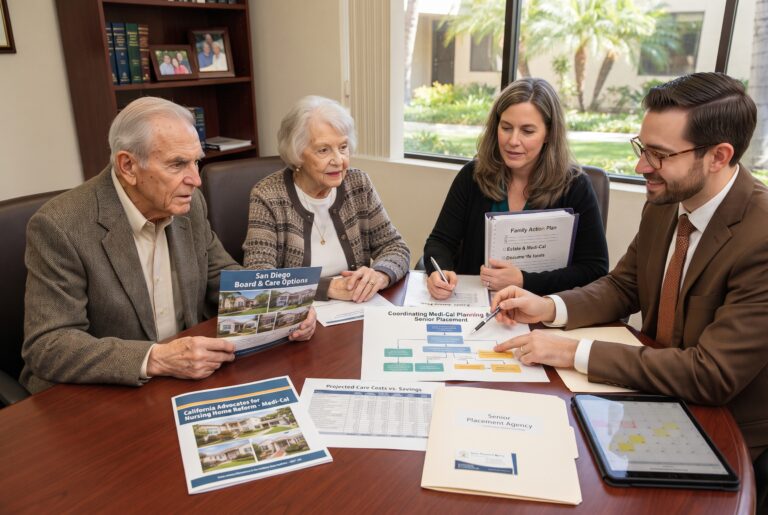
Quick answer: Elder law Medi-Cal planning and assisted living placement work best when coordinated. Because Medi-Cal does not pay...
Quick answer: Many San Diego board and care homes and assisted living communities have caregivers who speak Spanish, Tagalog,...

Quick answer: LGBTQ+ senior living in San Diego should feel safe, affirming and respectful. California law protects LGBTQ+ residents...