
Home Health in Assisted Living: Does Medicare Cover It?
Quick answer: Yes. Medicare home health in assisted living is covered when a resident is homebound, needs intermittent skilled...


Quick answer: An advance health care directive names who makes medical decisions for your parent and records their wishes. A POLST (Physician Orders for Life-Sustaining Treatment) is a medical order, signed by your parent and a physician, nurse practitioner or physician assistant, that tells emergency responders what treatment to provide. In California assisted living and board and care homes, both should be on file and easy to find.
Families often focus on finding the right assisted living community and paying for it, then realize too late that no one knows what Mom wants in a medical emergency. A POLST in California assisted living, together with an advance health care directive, makes sure your parent’s wishes are known and followed. This guide explains the difference between an advance directive and a POLST, how each works in California care homes, who should have one, how to complete them, and how they fit with hospice and end-of-life planning.
An advance health care directive is a legal document that does two things:
Any adult with capacity can complete one. California’s statutory form must be signed and either witnessed by two qualified adults or notarized. Residents of skilled nursing facilities have additional witness requirements. An advance directive guides decisions, but it is not a medical order that emergency responders follow on the spot.
A POLST is a medical order for people with a serious illness or frailty. It is signed by the patient, or their legally recognized decision-maker, and by a physician, nurse practitioner or physician assistant. In California it is printed on bright pink paper so it stands out.
A POLST covers:
Because a POLST is a medical order, paramedics and other health care providers can follow it immediately.
Most seniors entering a care home benefit from having both, plus a durable power of attorney for finances. Our guide should I be power of attorney for my parents covers the financial side.
California assisted living communities and board and care homes are licensed as Residential Care Facilities for the Elderly (RCFEs). They are non-medical settings, so staff call 911 in an emergency. When a resident has a valid POLST or prehospital do-not-resuscitate form, California rules allow facility staff to honor it, for example by not starting CPR when the form says not to, and to give it to responding paramedics.
To make that work in practice:
Our guides to assisted living in San Diego, board and care homes in San Diego, and RCFE licensing and inspection reports explain how these homes operate.
A POLST is generally recommended for people with a serious, progressive illness or advanced frailty, the kind of person whose clinician would not be surprised if they died within the next year or so. That includes many residents of memory care facilities in San Diego and people with advanced heart, lung or kidney disease. Healthy older adults usually need an advance directive, not a POLST.
POLST conversations often happen as a parent’s health declines, and they frequently lead families to consider palliative care or hospice. Hospice can be provided right in an assisted living community or board and care home. Learn more about hospice care in San Diego and our palliative care definition.
When a parent is moving into a senior care home, bring copies of both documents to the admission meeting so the home can file them with the care plan and share them with visiting clinicians.
Families often ask what a POLST in California assisted living or a board and care home actually changes when something goes wrong at 2 a.m. In a typical emergency:
In a small senior care home with one caregiver on duty overnight, this only works if that caregiver knows exactly where the form is. Ask how the home trains night staff, and check during a visit that the form is where it should be.
Dementia makes advance planning more urgent, because the window for a parent to express their own wishes eventually closes. If your parent has early memory loss, try to complete the advance directive now, while they can still choose an agent and talk about values. Our guide on what to do after a dementia diagnosis covers these early steps.
If your parent can no longer make medical decisions, their legally recognized decision-maker, usually the health care agent named in the advance directive, can complete a POLST with the clinician. The decision-maker’s job is to choose what the parent would have wanted, not what the family would prefer. For many families of residents in memory care or dementia-focused board and care homes in San Diego, this conversation becomes part of planning for hospice.
When a parent moves into assisted living, memory care or one of the board and care homes in San Diego, bring a folder with:
Ask the home to note the POLST in the resident’s records and to tell you whenever a visiting doctor or hospice team reviews it.
Disagreement is common, especially when one sibling has been the main caregiver and another lives far away. A few steps help:
Our article on when siblings disagree on a parent’s care offers more ways to find common ground. Families whose faith shapes end-of-life choices may also find our guide to faith-based senior living in San Diego helpful.
Consider a hypothetical family whose 88-year-old mother lives in a board and care home in Santee. She has heart failure and moderate dementia. Years earlier she signed an advance directive naming her son as agent and writing that she did not want to be kept alive on machines. After her second hospital stay in three months, her doctor and son complete a POLST choosing do not resuscitate and comfort-focused treatment.
The board and care home files the pink form, trains its night caregiver on where to find it, and arranges hospice through its hospice waiver. When her breathing changes one night, the caregiver calls hospice and the family instead of starting CPR, and she stays in her room, comfortable, with her son beside her. The planning her family did ahead of time made that possible. Our page on board and care homes in Santee describes options in that area.
A Physician Orders for Life-Sustaining Treatment form: a medical order, signed by the patient and a clinician, that tells providers what treatment to give in an emergency. It is printed on bright pink paper in California. It is meant for people with serious illness or frailty.
An advance directive names a health care agent and records wishes. A POLST is a medical order for current treatment decisions. Most seniors moving into a care home benefit from having both.
California rules allow RCFE staff to honor a valid POLST or prehospital DNR, while still calling 911 as required. Make sure the home has a copy on file and knows where the original is kept.
The patient or their legally recognized decision-maker, plus a physician, nurse practitioner or physician assistant. If your parent can no longer decide, their health care agent can usually sign based on what your parent would have wanted.
It does not expire, but it should be reviewed regularly and updated when health or wishes change. Good times to review it are after a hospital stay, a new diagnosis or a move into a care home.
No. California has a statutory form, though many families complete it with their estate plan. The form must be signed with two qualified witnesses or a notary to be valid.
It should. Ask the care home to send the POLST, or a copy as its policy allows, with your parent whenever they are transferred, and bring a copy yourself. The hospital team will review it and may update it with your parent or their decision-maker during the stay.
California rules allow RCFE staff to honor a valid POLST or prehospital DNR, and homes should have a policy on how they do it. Ask about that policy before move-in. If a home’s approach does not match your parent’s wishes, talk with the administrator or consider another home.
An advance health care directive names who speaks for your parent and records their values, while a POLST turns current treatment wishes into medical orders that responders follow. For residents of California assisted living and board and care homes, both should be completed early, shared with the care home and doctors, and reviewed after every major change. If you are preparing for a move, a free senior care assessment can help you find a home that honors your parent’s wishes.
Quick answer: Yes. Medicare home health in assisted living is covered when a resident is homebound, needs intermittent skilled...
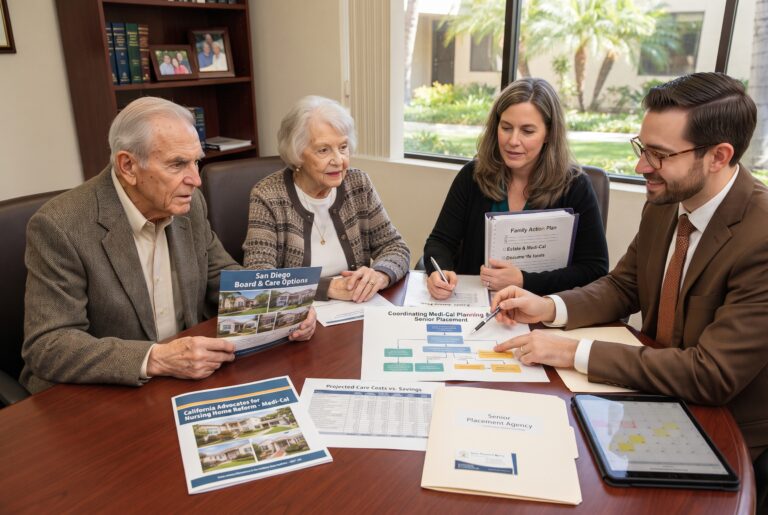
Quick answer: Elder law Medi-Cal planning and assisted living placement work best when coordinated. Because Medi-Cal does not pay...

Quick answer: Many San Diego board and care homes and assisted living communities have caregivers who speak Spanish, Tagalog,...

Quick answer: LGBTQ+ senior living in San Diego should feel safe, affirming and respectful. California law protects LGBTQ+ residents...