Home Health in Assisted Living: Does Medicare Cover It?
Quick answer: Yes. Medicare home health in assisted living is covered when a resident is homebound, needs intermittent skilled...


Quick answer: Yes. Medicare home health in assisted living is covered when a resident is homebound, needs intermittent skilled nursing or therapy, and a doctor or allowed practitioner orders care under a plan of care after a face-to-face visit. Medicare treats an assisted living apartment or board and care room as the resident’s home. Home health does not replace the facility’s personal care, and it cannot be used in a skilled nursing facility.
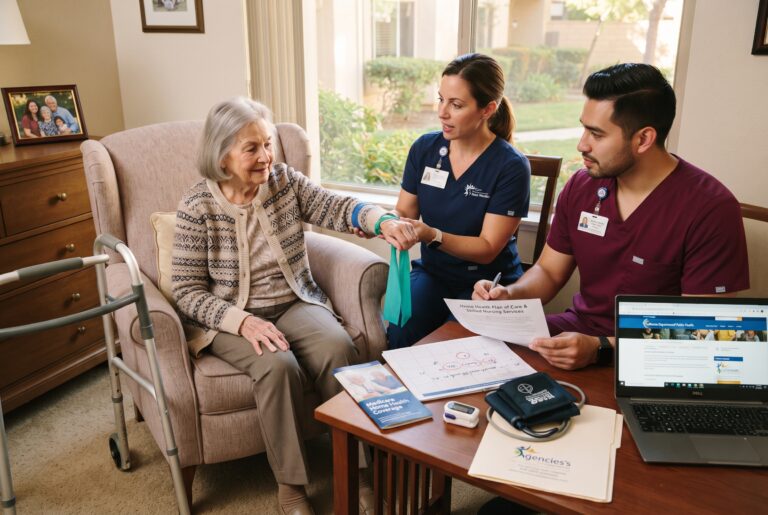
Many families assume that once a parent moves into assisted living, Medicare home health is no longer available. In fact, home health in assisted living is common. Nurses and therapists visit residents in their apartments or rooms to provide skilled care after a hospital stay, a fall, a new diagnosis, or a decline. This guide explains who qualifies, what home health covers, how it differs from caregiving, how to arrange it, and how it fits with assisted living and board and care.
Medicare home health provides skilled, short-term care at home, delivered by a Medicare-certified home health agency. Services can include:
Our guide to home health care in San Diego explains these services in more detail.
Yes. Medicare considers a resident’s assisted living apartment or board and care room to be their home. Medicare-certified home health agencies can provide covered services there. The one major exception is a skilled nursing facility, where home health is not covered because skilled care is already provided. See assisted living in San Diego and board and care homes in San Diego.
Many assisted living residents meet the homebound standard, especially after a hospitalization.
For eligible beneficiaries under Original Medicare, covered home health services usually cost nothing. Durable medical equipment may have 20% coinsurance after the Part B deductible. Medicare Advantage plans cover home health but may require prior authorization and in-network agencies.
In assisted living and board and care, the facility provides personal care. Home health adds skilled services the facility cannot provide.
Home health can also help prevent hospital readmissions by catching problems early.
Home health focuses on recovery and improvement. Hospice focuses on comfort for people with a terminal illness. Both can be provided in assisted living and board and care, but generally not at the same time for the same condition. See hospice care in San Diego and our palliative care definition.
Home health in assisted living works best when everyone knows their role. A simple way to think about it:
The best results come when the care home and the agency talk. Ask the nurse to leave a brief note or call the home after each visit, and ask the care home to tell the agency right away about falls, new confusion, or changes in eating.
Medicare treats both as your parent’s home, so the coverage rules are the same. The experience is a little different.
In a large assisted living community, several agencies may visit different residents, and the community may have a preferred agency or even one on site. Coordination usually runs through the wellness director or nurse.
In a board and care home in San Diego, with about 6 residents and the same few caregivers every day, coordination is often simpler. The caregiver who helps your parent every morning can show the physical therapist exactly how transfers go, and can practice the therapist’s exercises between visits. Many board and care homes in San Diego work with the same home health agencies regularly. Our family guide to board and care homes explains how these small homes handle health coordination.
Medicare home health does not require a prior hospital stay, and there is no set limit on how long it can continue as long as your parent stays eligible. In practice, care is ordered in certification periods of up to 60 days. The doctor can recertify if skilled care is still needed.
Home health usually ends when:
The agency must give written notice before Medicare-covered services end, and you can ask for a fast appeal if you disagree. A new episode can begin later if your parent has another hospitalization, fall or decline.
Medicare patients have the right to choose their home health agency, though Medicare Advantage plans may limit you to in-network agencies. When choosing:
For example, imagine a family in Chula Vista whose father, 84, lives in one of the 6-bed board and care homes in Chula Vista. He is hospitalized for pneumonia and comes back weaker, unsteady on his feet and short of breath. The hospital discharge planner sends a home health referral before he leaves.
Within a couple of days, a nurse visits to check his breathing and medications, and a physical therapist starts twice-weekly visits. The therapist shows his caregivers how to help him stand safely and which exercises to repeat daily. A few weeks later he is walking to the dinner table again, the agency discharges him, and the care home continues his daily care. Every case differs, but this is how home health in assisted living and board and care is meant to work: skilled care layered on top of daily care.
Elder Answers provides free senior care placement throughout San Diego County. Our advisors personally visit assisted living communities and board and care homes and can point you to homes that coordinate well with home health, hospice and mobile doctors. Our help is free for families because the care home pays us after move-in, and the rate you pay does not change. Contact Elder Answers to find a home that fits your parent’s health needs.
Yes. Medicare treats an assisted living apartment as the resident’s home. The same applies to residents of licensed board and care homes, since that is where they live.
Yes, if the resident meets Medicare home health eligibility. Many residential senior care homes in San Diego work with home health agencies regularly and can help coordinate visits.
Residents who are homebound, need intermittent skilled care, and have a doctor’s order and plan of care. The doctor must certify eligibility, usually after a face-to-face visit related to the reason for care.
Yes, for eligible residents. Original Medicare usually covers it at no cost. Medicare Advantage plans also cover home health but may require in-network agencies and prior approval.
No. Home health is skilled and medical; home care is non-medical help with daily activities. Home health visits are short and time-limited, while the care home provides daily hands-on help. Learn more in our guide to home health care.
Not in a skilled nursing facility, where skilled care is already provided. Residents of assisted living or board and care homes are not in a SNF, so they can still receive Medicare home health if eligible.
No. Original Medicare does not require a prior hospital stay for home health. Your parent needs to be homebound, need intermittent skilled care, and have a doctor’s order after a qualifying face-to-face visit.
Care is ordered in periods of up to 60 days, and the doctor can recertify if skilled care is still needed. There is no fixed limit on the number of periods while your parent remains eligible. Home health ends when goals are met or needs become custodial only.
Yes, with Original Medicare you can choose any Medicare-certified agency that serves the area. Medicare Advantage plans may require an in-network agency. Ask the assisted living community or board and care home which agencies already work well with its staff.
Home health in assisted living is covered by Medicare for eligible residents who are homebound, need intermittent skilled care, and have a doctor’s order. It adds nursing and therapy to the personal care the facility provides, and is especially helpful after a hospital stay or fall. Ask the doctor for a referral and coordinate with the care home. A free senior care assessment can help you find a home that works well with home health partners.
Quick answer: Yes. Medicare home health in assisted living is covered when a resident is homebound, needs intermittent skilled...

Quick answer: Elder law Medi-Cal planning and assisted living placement work best when coordinated. Because Medi-Cal does not pay...

Quick answer: Many San Diego board and care homes and assisted living communities have caregivers who speak Spanish, Tagalog,...

Quick answer: LGBTQ+ senior living in San Diego should feel safe, affirming and respectful. California law protects LGBTQ+ residents...