
Home Health in Assisted Living: Does Medicare Cover It?
Quick answer: Yes. Medicare home health in assisted living is covered when a resident is homebound, needs intermittent skilled...


When families compare board and care cost in San Diego, the monthly rate is only half the story. One home quotes $6,500 and includes nearly everything. Another quotes $5,800 and then adds incontinence supplies, transportation and a care-level fee. By the third month, the “cheaper” home costs more.
This guide explains what a board and care monthly rate usually includes, what commonly costs extra, how care levels and room type change the price, what California law says about deposits and rate increases, and the exact questions to ask so you can compare homes fairly. Board and care homes in San Diego typically cost $5,500 to $9,500 a month in 2026, so knowing what you are paying for matters.
In 2026, board and care homes in San Diego typically cost $5,500 to $9,500 per month. A shared room for a resident with moderate needs sits near the low end. A private room with heavy care, dementia behaviors or two-person transfers sits near the top. Private rooms often cost $1,000 to $2,000 more.
Small dementia-focused board and care homes usually run $6,000 to $9,500 a month. For comparison, assisted living in San Diego typically costs $5,500 to $12,500 and memory care $7,500 to $14,000. The reason board and care is often the better value for frail seniors is that most homes include care in the monthly rate rather than adding it on top of rent.
Location also matters. Coastal areas such as La Jolla, Del Mar and Carlsbad usually cost more than East County or inland North County. Our breakdown of board and care costs across San Diego County covers those differences, and the full 2026 San Diego senior care cost guide compares every level of care.
Most San Diego board and care homes quote one monthly rate that covers the room, three meals plus snacks, help with daily personal care, medication management, 24-hour supervision, housekeeping, laundry, utilities and basic activities. These are the core services every licensed RCFE must provide, so they should be in the base rate.
Here is what is typically included:
California’s RCFE regulations require the admission agreement to spell out the basic services covered by the rate (Title 22, section 87507). If an item matters to you, make sure it is written there, not just promised on a tour.
The most common extras are incontinence supplies, transportation and escorts to appointments, hair and nail services, personal items, phone or cable in the room, and one-on-one outings. Medications themselves are billed through your parent’s insurance, not the home. Some homes include a few of these; others charge separately for all of them.
Items to ask about one by one:
Ask for a written list of every optional fee before you sign. Our guide to board and care admission agreements in California explains where these appear in the contract.
Many homes set the rate based on how much help a resident needs. Heavier care, such as full incontinence care, two-person transfers, insulin coordination, frequent night waking or dementia behaviors, raises the rate. Some homes use a points-based assessment; small homes often quote one rate after meeting your parent.
Needs that usually move the price up:
The home assesses your parent before admission. Our explainer on how care homes assess activities of daily living shows what they look at, so you can predict the care level before you get a quote.
California limits what an RCFE can charge up front. A home may charge a pre-admission fee only if it gives a written statement of what the fee covers, and it must refund it in certain cases. Security deposits, damage deposits and cleaning fees are not allowed, though a home may collect the first and last month’s rate.
Key rules under California Health and Safety Code section 1569.651, as summarized by California Advocates for Nursing Home Reform:
These rules are a strong reason to read the contract carefully. If a home asks for a large “community fee” or deposit, ask what law it is relying on and get the refund terms in writing.
California requires RCFEs to give at least 90 days’ written notice before a general rate increase, stating the amount and the reason (Health and Safety Code section 1569.655, as updated by SB 1406 effective January 1, 2025). Increases tied to a change in your parent’s care level are handled differently and can take effect sooner if the agreement allows it.
What to know:
Our guide to how board and care rates change over time goes deeper on budgeting for increases over several years.
A private room typically costs $1,000 to $2,000 more per month than a shared room, and a private bathroom adds more. Coastal and central San Diego neighborhoods usually cost more than East County, South Bay and inland North County. The size, age and staffing of the house also play a role.
Questions that clarify the room portion of the rate:
For help weighing that choice, see our article on private vs. shared rooms in board and care. Families looking in specific areas can also check local pages such as board and care in El Cajon and board and care in Carlsbad.
Compare the total monthly cost, not the advertised base rate. Ask every home the same questions, write down all extras, estimate what your parent will actually use each month, and add them up. Then ask how the rate will change if needs increase. The home with the lowest base rate is not always the least expensive.
A simple comparison method:
For example, a family in Santee comparing two homes might find that a home quoting $6,200 with all supplies and appointment transport included costs less in practice than one quoting $5,700 that bills $400 a month in supplies and $75 per appointment trip. Our guide on how to compare two board and care homes side by side includes a full checklist.
Most families pay board and care cost privately from income, savings, the sale or rental of a home, or long-term care insurance. Veterans and surviving spouses may qualify for VA Aid and Attendance, and some homes accept Medi-Cal’s Assisted Living Waiver. Medicare does not pay for board and care.
Payment sources to explore:
Our page on board and care homes in San Diego explains more about how these homes work.
Elder Answers helps San Diego families compare board and care homes on real, all-in cost, not just advertised rates. We know which homes include supplies and transport, how each home sets care levels, and which homes have openings now. We send a short list of homes we have personally visited that fit your parent’s needs and budget.
Our help is free for families because homes pay us after move-in, and that fee does not change your rate. We share your information only with homes you choose. We have helped San Diego families for well over a decade. Contact Elder Answers for help comparing your options.
In 2026, most board and care homes in San Diego cost $5,500 to $9,500 a month. Shared rooms with moderate care are at the lower end, and private rooms with heavy care or dementia needs are at the higher end. Private rooms often add $1,000 to $2,000.
Meals are almost always included, usually three meals plus snacks. Medication management, meaning storage, giving doses and record keeping, is included. The medications themselves are billed through your parent’s insurance or paid separately.
It varies by home. Some include briefs, wipes and gloves in the rate, while others bill monthly or ask families to supply them. Ask in writing, since supplies can add a noticeable amount each month.
California does not allow RCFEs to charge security, damage or cleaning deposits. A home may collect the first and last month’s rate and, with a written explanation, a pre-admission fee that must be refunded in certain situations. Residents on SSI cannot be charged a pre-admission fee.
California requires at least 90 days’ written notice for general rate increases, with the amount and reason stated. Increases due to a change in your parent’s care level can take effect sooner if the admission agreement allows, but the home must explain them in writing.
Differences usually come from room type, care level assessment, location, what the rate includes, and staffing. A lower quote that excludes supplies or transport may cost more in practice. Compare total monthly costs, not base rates.
No. Medicare does not pay for room, board or personal care in a board and care home. It does cover medical services your parent receives there, such as doctor visits, home health and hospice.
For seniors who need a lot of hands-on help, board and care is often less expensive because care is included in one rate. For independent seniors, assisted living’s base rent can be comparable or lower. The right comparison depends on your parent’s care needs.
Quick answer: Yes. Medicare home health in assisted living is covered when a resident is homebound, needs intermittent skilled...
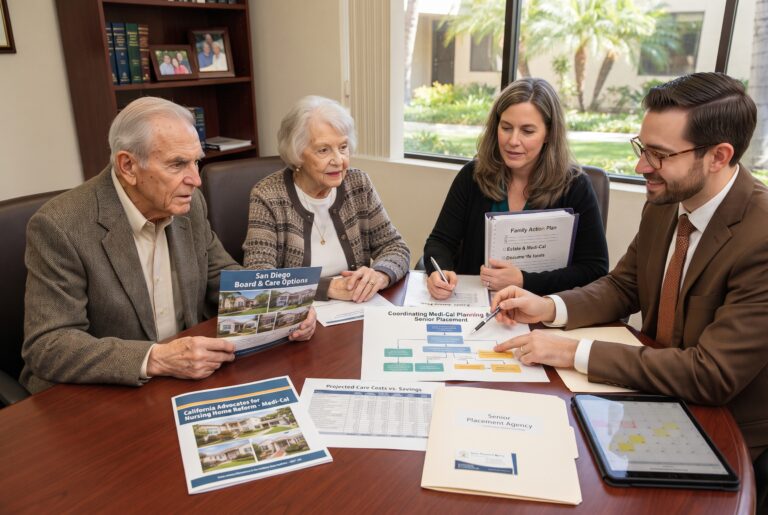
Quick answer: Elder law Medi-Cal planning and assisted living placement work best when coordinated. Because Medi-Cal does not pay...

Quick answer: Many San Diego board and care homes and assisted living communities have caregivers who speak Spanish, Tagalog,...

Quick answer: LGBTQ+ senior living in San Diego should feel safe, affirming and respectful. California law protects LGBTQ+ residents...