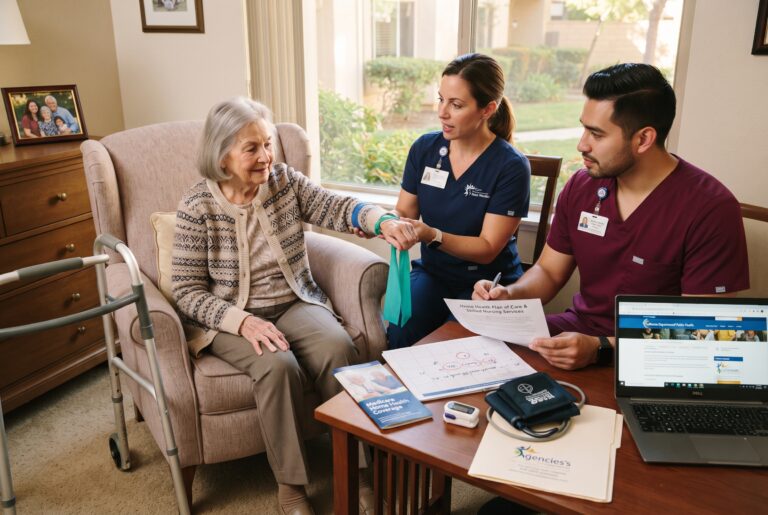
Home Health in Assisted Living: Does Medicare Cover It?
Quick answer: Yes. Medicare home health in assisted living is covered when a resident is homebound, needs intermittent skilled...


Quick answer: The Medi-Cal share of cost in a nursing home is the part of a resident’s monthly income they pay to the facility before Medi-Cal pays the rest. On long-term care Medi-Cal, most of your parent’s income goes to the nursing home. They keep a small personal needs allowance, and allowed deductions such as health insurance premiums and a spousal allowance come off first.
The Medi-Cal share of cost in a nursing home confuses many San Diego families, and the rules got more important when California brought back the Medi-Cal asset limit for older adults and long-term care. This guide explains what share of cost means, how the county calculates it, what a spouse at home can keep, how the asset limit works, and how to apply for long-term care Medi-Cal in San Diego without costly mistakes.
A Medi-Cal share of cost is the amount of a member’s own monthly income they must pay toward their care before Medi-Cal pays. In the community, share of cost works like a monthly deductible. In a nursing home, it works differently: the resident’s share of cost is paid directly to the nursing home every month as part of the bill.
Think of the nursing home’s Medi-Cal rate as having two payers. Your parent’s income pays first, as the share of cost. Medi-Cal pays the remainder of the daily rate. The nursing home cannot charge a Medi-Cal resident more than the share of cost for covered care.
The county starts with your parent’s gross monthly income, including Social Security, pensions, annuities and other regular payments, then subtracts allowed deductions:
Whatever income remains is the monthly Medi-Cal share of cost paid to the nursing home.
Imagine a single San Diego resident with $2,400 a month in Social Security and pension income who pays $165 a month for a supplemental health policy:
If the same resident had a spouse at home with little income of their own, part of the $2,400 could go to the at-home spouse instead, lowering the share of cost, sometimes to zero.
California reinstated the Medi-Cal asset limit for older adults, people with disabilities and long-term care Medi-Cal. The limits on countable assets are:
Countable assets include checking and savings accounts, stocks and bonds, and most real estate other than the home. The home, one vehicle, household goods and personal belongings, and certain other items are usually exempt. SSI-linked Medi-Cal follows the separate SSI limit of $2,000.
Uncompensated transfers made after the limit returned can trigger a period of ineligibility for nursing facility care. Before giving money or property to family, talk with an elder law attorney. Our guide to 10 ways an elder law attorney can help families explains what that consultation covers.
California applies federal spousal impoverishment protections when one spouse lives in a nursing home and the other stays in the community.
Both figures update every January. Confirm the current amounts with San Diego County or an elder law attorney before planning around them. If neither parent has a durable power of attorney in place, read should I be power of attorney for my parents before a crisis.
Not the same way. Medi-Cal does not pay room and board in assisted living or board and care homes, so there is no nursing home style share of cost in those settings. Residents pay the facility privately, through the SSI board and care rate, or with help from the Medi-Cal Assisted Living Waiver, which covers care services but not rent.
That is why many San Diego families compare private-pay board and care homes in San Diego with Medi-Cal-funded nursing home care. Our comparison of assisted living vs. nursing homes walks through that decision, and our overview of skilled nursing homes in San Diego explains what long-term nursing home care includes.
Medi-Cal can be retroactive for up to three months before the application month if your parent was eligible during those months. Our Medi-Cal eligibility guide covers general eligibility rules.
For most families, long-term care Medi-Cal is one stage in a longer plan. Many seniors pay privately for assisted living or a board and care home for several years, then move to a nursing home on Medi-Cal when they need 24-hour nursing. Mapping that path early helps families decide when to sell a home, how to title assets, and how long savings will last. Our guides on how to pay for a senior care home and financial planning for senior care can help.
What is the Medi-Cal share of cost in a nursing home? It is the part of the resident’s monthly income, after allowed deductions, that they pay to the nursing home before Medi-Cal pays the rest.
What is the personal needs allowance in a California nursing home? It is the small monthly amount a Medi-Cal nursing home resident keeps for personal items. Confirm the current figure with the county.
Is the Medi-Cal asset limit back? Yes. It is back at $130,000 for an individual and $195,000 for a couple.
Does Medi-Cal take my parent’s house? The home is usually exempt for eligibility. Estate recovery after death is limited to assets in the probate estate.
Can the share of cost be zero? Yes, if allowed deductions such as a spousal allowance use all of the resident’s income.
Can Medi-Cal pay for a nursing home retroactively? Yes, for up to three months before the application month, if your parent was eligible then.
On long-term care Medi-Cal, your parent’s income, minus a personal needs allowance and allowed deductions, becomes the monthly share of cost paid to the nursing home, and Medi-Cal pays the rest. With the asset limit back at $130,000, review assets and planned gifts with an elder law attorney first, confirm the nursing home has a Medi-Cal bed, and stay on top of county paperwork. A free senior care assessment can help you compare nursing home care with assisted living or board and care.
Quick answer: Yes. Medicare home health in assisted living is covered when a resident is homebound, needs intermittent skilled...

Quick answer: Elder law Medi-Cal planning and assisted living placement work best when coordinated. Because Medi-Cal does not pay...

Quick answer: Many San Diego board and care homes and assisted living communities have caregivers who speak Spanish, Tagalog,...

Quick answer: LGBTQ+ senior living in San Diego should feel safe, affirming and respectful. California law protects LGBTQ+ residents...