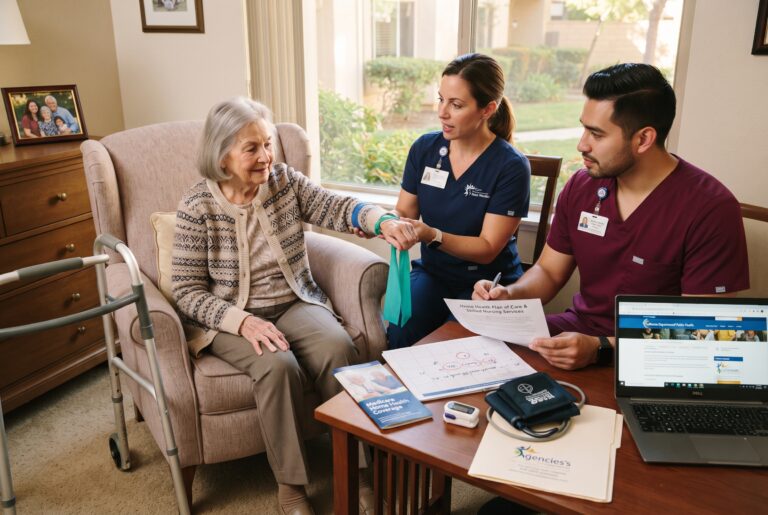
Home Health in Assisted Living: Does Medicare Cover It?
Quick answer: Yes. Medicare home health in assisted living is covered when a resident is homebound, needs intermittent skilled...


When a parent moves into a board and care home or assisted living, the family home suddenly becomes a financial question. Keep it? Sell it? Pass it to a child? In California, Prop 19 senior care planning matters because the rules decide whether the parent’s low property tax base survives a sale or an inheritance. This guide explains Prop 19 in plain language for San Diego families, with examples of how it plays out when a parent moves into residential senior care.
This is general information, not legal or tax advice. Property tax rules are technical and fact-specific, so confirm your situation with an estate planning attorney and the San Diego County Assessor before acting.
Prop 19 is a California constitutional amendment approved by voters in 2020. It changed two property tax benefits: it expanded a homeowner’s ability to take a low tax base to a new home, and it narrowed what children can keep when they inherit or receive a parent’s property. Both matter when a parent moves into senior care.
The two parts that affect families:
Because many San Diego seniors bought decades ago, their Prop 13 tax base may be a small fraction of today’s value. Whether that tax base survives often drives the decision to sell, keep or transfer the home after a move into a senior care home.
No. Moving out of a home does not trigger a property tax reassessment in California. Reassessment happens when ownership changes, such as a sale, a gift or a transfer at death. A parent who moves into a board and care home and still owns the house keeps the existing tax base.
What can change when a parent moves out:
In short, you do not need to rush a decision about the house just because your parent moved. Prop 19 only comes into play when the home is sold, given away or inherited.
Under Prop 19, a child who receives a parent’s family home can keep the parent’s taxable value only if the child makes it their primary residence within one year and files for the homeowners’ exemption. The value that can be excluded is capped, so very valuable homes may be partly reassessed even when a child moves in.
The key rules, according to the State Board of Equalization:
A hypothetical example: a mother in Clairemont has a taxable value of $150,000 on a home worth $1,100,000. Her son inherits it and moves in within a year. The limit is $150,000 plus $1,044,586, or $1,194,586. Because the market value is below that, the son keeps her $150,000 base. If the home were worth $1,400,000, the amount above the limit would be added to his taxable value.
The base year value transfer helps a parent who sells their home and buys or builds a replacement home in California within two years. It does not apply when a parent moves into a board and care home or assisted living as a renter, because no replacement home is purchased.
Situations where it can help:
Basic rules from the BOE: the owner must be 55 or older (or severely and permanently disabled), the replacement must be bought within two years of the sale, and the benefit can be used up to three times. If the new home costs more, part of the difference is added to the tax base, though replacements up to 105 percent of the original’s value in the first year, or 110 percent in the second, avoid that addition. The claim is filed with the assessor in the county of the new home.
For most families, Prop 19 points toward one of three paths: a child moves in and keeps the tax base, the family sells to pay for senior care, or the family rents the home while the parent still owns it. The right path depends on care costs, who will live in the house, and your parent’s other assets.
A child will live in the home. Prop 19’s parent-child exclusion can preserve the low tax base, subject to the cap. The family still needs a way to pay for the parent’s care, often from savings, income or a family agreement.
No child will live there and care costs are high. Selling during the parent’s lifetime is often the practical choice. Proceeds fund care, and the family avoids a reassessment that would follow an inheritance by a child who rents the home. Our guide to selling a parent’s home to pay for care covers taxes and Medi-Cal.
The family wants rental income now. While your parent owns the home, renting does not trigger reassessment. Rent can help pay for a board and care home. At death, though, a child who keeps renting it will generally face reassessment. See renting out a parent’s home to fund care.
Some families consider deeding the house to a child while the parent is alive, hoping to simplify things before a move into senior care. That can backfire. A lifetime gift may lose the step-up in income tax basis that heirs receive at death, and it can create Medi-Cal transfer penalties if long-term care is needed.
Why caution matters:
Many families instead keep the home in a revocable living trust, which avoids probate and, in California, generally keeps the home outside Medi-Cal estate recovery, which is limited to probate assets. An elder law attorney can confirm what fits your family.
If your family wants to keep the house for a child under Prop 19, you still need a plan to pay for care. In 2026, board and care homes in San Diego typically cost $5,500 to $9,500 per month, and memory care $7,500 to $14,000. Income, savings, insurance and family contributions must cover that.
Options families use:
Families sometimes underestimate how long care lasts. Build a budget for several years, including rate increases, before deciding to hold the house. Our comparison of board and care costs across San Diego County shows how much location affects the monthly rate.
In San Diego County, Prop 19 claims are filed with the San Diego County Assessor. For a parent-child transfer, the child files Form BOE-19-P along with the homeowners’ exemption. For a senior’s base year transfer, the claim goes to the assessor in the county where the replacement home is located.
A simple checklist:
Deadlines matter, but late filing can sometimes still qualify with benefits starting later. Ask the assessor’s office if you are unsure.
Elder Answers does not give tax or legal advice, but we help families with the other half of the decision: finding the right senior care home at a cost the family can sustain. Our service is free to families because care homes pay us after a resident moves in, and your rate does not change.
Our advisors personally visit the board and care homes, assisted living and memory care communities we recommend. We share your information only with homes you choose, and we have helped San Diego families for well over a decade. Contact Elder Answers or explore board and care homes in San Diego.
No. Moving out does not change ownership, so the home is not reassessed. Reassessment happens on a sale, gift or inheritance. Ask the County Assessor whether the homeowners’ exemption continues while your parent lives in a care facility.
Only if you make it your primary residence within one year and file for the homeowners’ exemption. The excluded value is capped at the parent’s taxable value plus an adjusted $1 million allowance, which is $1,044,586 for transfers through February 15, 2027.
While your parent owns the home, renting it does not trigger reassessment. If a child inherits and continues to rent it rather than living there, the home will generally be reassessed to market value.
Not directly. The base year transfer applies only when a senior buys or builds a replacement home. Renting a room in a board and care home or assisted living does not use the benefit.
Usually not without advice. A lifetime gift can lose the step-up in basis at death, may cause Medi-Cal penalties, and does not improve the Prop 19 outcome. An elder law attorney can suggest safer options, such as a living trust.
File Form BOE-19-P with the County Assessor where the property is located, generally within three years of the transfer and before selling to a third party, along with the homeowners’ exemption.
Up to three times under Prop 19, as long as each replacement home is bought or built within two years of selling the original and the owner is 55 or older or severely and permanently disabled.
The California State Board of Equalization publishes Prop 19 fact sheets and claim forms, and the San Diego County Assessor’s office can answer local filing questions.
Quick answer: Yes. Medicare home health in assisted living is covered when a resident is homebound, needs intermittent skilled...
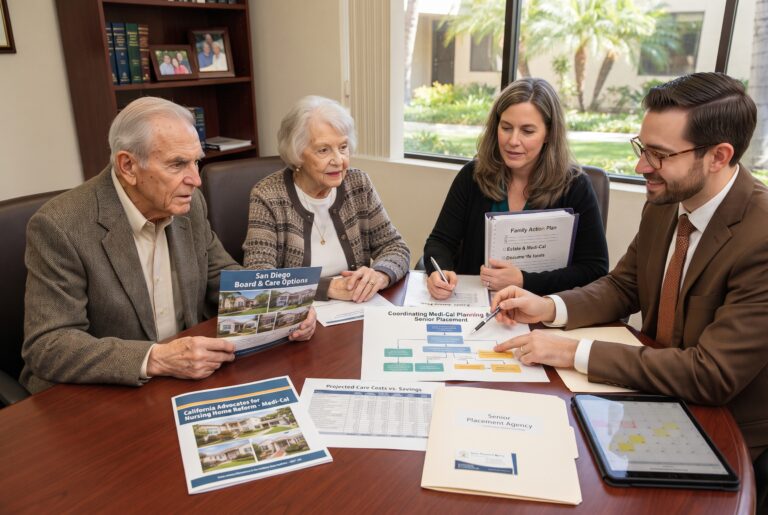
Quick answer: Elder law Medi-Cal planning and assisted living placement work best when coordinated. Because Medi-Cal does not pay...

Quick answer: Many San Diego board and care homes and assisted living communities have caregivers who speak Spanish, Tagalog,...

Quick answer: LGBTQ+ senior living in San Diego should feel safe, affirming and respectful. California law protects LGBTQ+ residents...