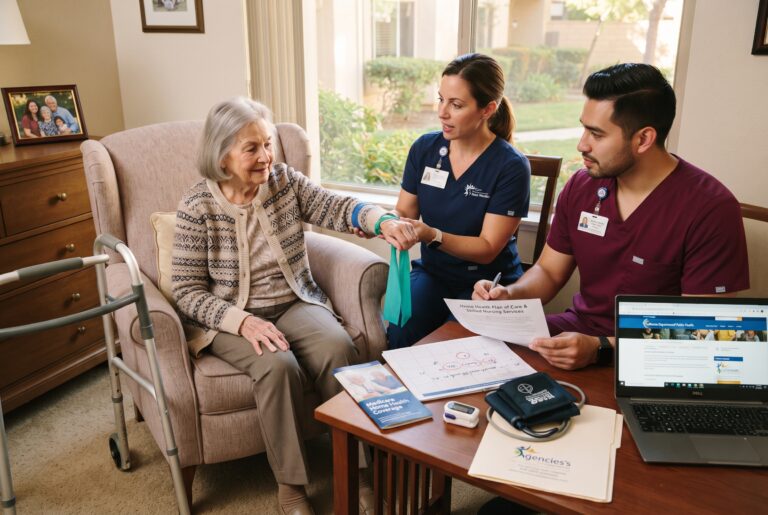
Home Health in Assisted Living: Does Medicare Cover It?
Quick answer: Yes. Medicare home health in assisted living is covered when a resident is homebound, needs intermittent skilled...


For many California families, a parent’s house is the largest asset they have, and it is often the only realistic way to pay for years of senior care. Selling parents home to pay for care is a big decision, with tax, Medi-Cal, legal and emotional pieces that all need attention. This guide walks San Diego families through when selling makes sense, who can legally sell, how taxes and Medi-Cal treat the sale, and how to pay for care while the home is on the market.
This is general information, not legal or tax advice. Rules change and every family is different, so plan to talk with a California elder law attorney and a tax professional before you list the house.
Selling a parent’s home to pay for care makes sense when your parent is unlikely to return home, savings and income cannot cover care costs, and no family member plans to live in the house. In San Diego, where many seniors own homes with large equity, a sale can fund years of residential senior care.
Signs that selling is the right move:
Reasons to pause before selling:
In 2026, board and care homes in San Diego typically cost $5,500 to $9,500 per month, assisted living $5,500 to $12,500 and memory care $7,500 to $14,000. Those numbers help you estimate how long sale proceeds would last.
Only the owner, or someone with legal authority to act for them, can sell a home. If your parent can still make decisions, they sign the sale documents themselves. If not, a durable power of attorney, a trust’s successor trustee, or a court-appointed conservator must act. Finding out which applies is the first step.
The common paths:
If your parent still has capacity, the most valuable thing you can do this month is meet with an elder law attorney to set up or update a power of attorney and trust. Waiting until after a dementia diagnosis or hospital stay can make the process much harder. Our guide to next steps after a dementia diagnosis covers this planning.
A parent who sells a primary home can generally exclude up to $250,000 of gain, or $500,000 for a married couple, from federal income tax if they owned and lived in it for two of the last five years. A special rule helps seniors who moved into a licensed care facility, which can keep that exclusion available longer.
How the rules work for seniors in care:
That trade-off is real. Selling now may trigger tax on gain above the exclusion, while keeping the home until death may avoid it, but only if the family can pay for care without the sale. A tax professional can run both scenarios. California generally taxes capital gains as ordinary income, so state taxes matter too.
Medi-Cal reinstated an asset limit on January 1, 2026: $130,000 for an individual, plus $65,000 for each additional household member. A home your parent lives in, or intends to return to, is generally exempt. Once the home is sold, though, the cash proceeds count as assets and may affect eligibility.
What families should understand:
Most board and care homes are paid privately, so Medi-Cal matters mainly if your parent may later need a nursing home or the Assisted Living Waiver. Our guides to Medi-Cal eligibility and countable vs. exempt assets in 2026 explain more.
California’s Prop 19 limits how much of a parent’s low property tax base children can keep when they inherit a home. A child can keep the parent’s taxable value only if the child moves in as a primary residence, and only up to a value cap. If no child will live there, selling during the parent’s lifetime often makes more sense.
Quick points:
Read our detailed guide to Prop 19 and a parent’s home before deciding to keep the house for the next generation.
Selling a San Diego home can take one to three months, while your parent may need care today. Families bridge the gap with savings, short-term loans from relatives, bridge financing, or a care home that agrees to a short payment arrangement. Planning the bridge before the move avoids a stressful scramble.
Common ways to bridge the gap:
A note on reverse mortgages: a reverse mortgage generally becomes due when the borrower no longer lives in the home as a primary residence, including after more than 12 consecutive months in a care facility. If your parent already has one, plan for repayment when you sell.
To estimate how long proceeds will last, subtract selling costs, taxes and any mortgage from the sale price, add other savings, then divide by the expected monthly cost of care minus monthly income. Plan for rate increases and changing care needs, and keep a reserve for medical costs.
A hypothetical example: a family in Clairemont sells a parent’s home and nets $750,000 after selling costs and taxes. Their mother needs a board and care home at $7,500 a month, and her Social Security and pension provide $2,500. The monthly gap is $5,000, so the proceeds could cover the gap for roughly 12 years before accounting for rate increases.
Factors that shorten the timeline:
Choosing a well-run board and care home over a large assisted living community can stretch proceeds significantly, because board and care rates usually include care in one monthly price.
Selling a parent’s home is emotional, and the practical work is heavy. Start by moving your parent’s most meaningful belongings into their new room, then sort the rest with siblings. Many San Diego families use senior move managers, estate sale companies and agents who specialize in selling homes for older adults.
A practical sequence:
Our guide to the first 30 days in a board and care home can help you time visits and conversations during this period.
Elder Answers helps San Diego families find senior care homes that fit both the care needs and the budget, which makes sale proceeds last longer. Our service is free, because care homes pay us after a resident moves in, and your family’s rate does not change. We have helped families for well over a decade.
Our advisors personally visit the board and care homes, assisted living and memory care communities we recommend, and we share your information only with homes you choose. Contact Elder Answers to compare residential senior care options, or start with our guide to board and care homes in San Diego.
No. Most families move their parent first and sell later. You will need a way to pay the first few months, such as savings, a family loan or bridge financing, while the house is on the market.
Possibly. A single owner can usually exclude up to $250,000 of gain, and a married couple up to $500,000, if ownership and use rules are met. Seniors in licensed care facilities may qualify under a special one-year use rule. Gain above the exclusion may be taxed by both the IRS and California.
Generally yes, a primary home is exempt, including when the owner is in a care facility and intends to return or a spouse lives there. Once sold, the cash proceeds count toward the 2026 asset limit of $130,000 for an individual.
Yes, if the durable power of attorney gives the agent authority over real estate. The title company will review the document. If the house is in a trust, the successor trustee sells it under the trust’s terms instead.
If your parent can no longer understand the decision, you may need a court conservatorship to sell the home. This takes months, so talk with an elder law attorney right away. If your parent still has capacity, set up documents now.
Sometimes. Keeping the home can eliminate capital gains for heirs, but only works if the family can pay for care without the sale. Prop 19 may also raise property taxes for heirs who do not live in the home. A tax professional can compare both paths.
Yes, some families pay care costs together and are repaid from the estate later, but this should be documented in writing. Without clear records, it can cause disputes and may raise Medi-Cal questions.
When the need is urgent, a move can often happen within a few days, once a physician’s report, TB screening and medication list are ready. The home sale does not need to happen first.
Quick answer: Yes. Medicare home health in assisted living is covered when a resident is homebound, needs intermittent skilled...
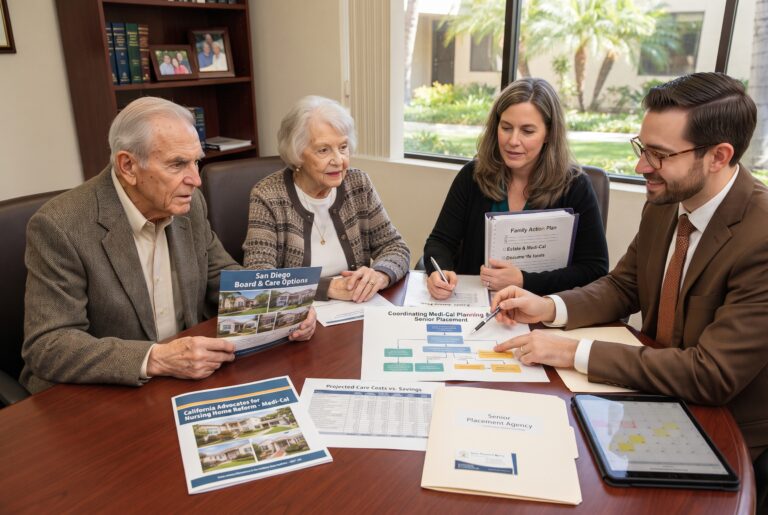
Quick answer: Elder law Medi-Cal planning and assisted living placement work best when coordinated. Because Medi-Cal does not pay...

Quick answer: Many San Diego board and care homes and assisted living communities have caregivers who speak Spanish, Tagalog,...

Quick answer: LGBTQ+ senior living in San Diego should feel safe, affirming and respectful. California law protects LGBTQ+ residents...