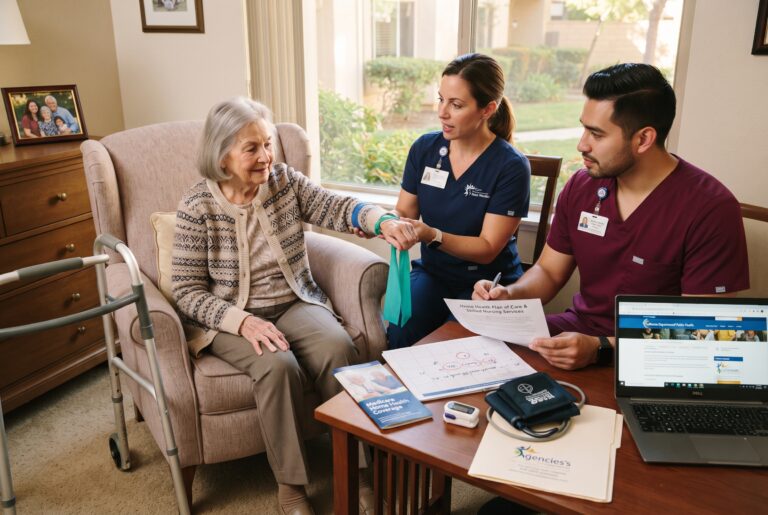
Home Health in Assisted Living: Does Medicare Cover It?
Quick answer: Yes. Medicare home health in assisted living is covered when a resident is homebound, needs intermittent skilled...


Quick answer: Medi-Cal estate recovery in California lets the state seek repayment for certain long-term care costs after a Medi-Cal member dies, but since 2017 it only reaches assets in the member’s probate estate. Recovery cannot happen while a spouse, a child under 21, or a blind or disabled child survives, and heirs can request hardship waivers.
Many San Diego families delay applying for Medi-Cal because they fear the state will take the family home. Understanding Medi-Cal estate recovery in California helps you make that decision with facts instead of rumors. This guide explains what estate recovery is, which costs and assets it covers, who is exempt, how the process works after a death, and how families can plan ahead with an elder law attorney.
Federal Medicaid law requires every state to try to recover certain long-term care costs from the estates of members who received them. In California, the Department of Health Care Services (DHCS) runs the Medi-Cal Estate Recovery Program.
Two facts matter most:
For members who died on or after January 1, 2017, Medi-Cal estate recovery in California is limited to costs Medi-Cal paid for:
Estate recovery applies to members who were 55 or older when they received those services, or who were permanently living in a nursing facility at any age. Routine doctor visits and prescriptions for a member who never used long-term care are not recovered.
Since 2017, only assets that pass through probate are subject to Medi-Cal estate recovery in California. That single rule shapes nearly all planning. In general:
Because many California families already use living trusts, Medi-Cal estate recovery often recovers little or nothing in practice. Each family’s situation should still be reviewed by an elder law attorney before relying on these general rules. Our guide to 10 ways an elder law attorney can help families explains what that review includes.
DHCS cannot pursue Medi-Cal estate recovery while any of these people survive the member:
California also does not recover from the estate of a surviving spouse after that spouse later dies. In practice, that means a married couple’s home is often fully protected when the first spouse to need care dies before the other.
Heirs can ask DHCS to waive recovery when it would cause substantial hardship. Common situations include:
Hardship requests must be made in writing within the deadline stated in DHCS’s notice, with documentation.
Usually not. For most San Diego families, the bigger financial risks are paying privately until savings are exhausted, or giving away assets in ways that trigger a period of ineligibility now that California’s Medi-Cal asset limit is back at $130,000 for an individual. A one-hour consultation with an elder law attorney can often answer the estate recovery question for the specific home and accounts involved.
For general eligibility rules, start with our Medi-Cal eligibility guide. For the bigger picture of paying for care, see how to pay for a senior care home.
Estate recovery mainly matters for families relying on long-term care Medi-Cal. If your parent is still choosing a care setting, compare skilled nursing homes in San Diego, where Medi-Cal often pays, with private-pay board and care homes in San Diego, which usually cost about $5,500 to $9,500 a month. Our 2026 guide to assisted living costs explains typical prices.
Where your parent receives care, and who pays for it, determines whether Medi-Cal estate recovery is even a factor.
Private-pay board and care or assisted living. If your parent pays a board and care home or assisted living community with their own income and savings, Medi-Cal paid nothing for that care, so there is nothing to recover for it. Most residents of board and care homes in San Diego pay privately, often with help from family, VA benefits or long-term care insurance.
Medi-Cal Assisted Living Waiver. This program pays the care portion in participating assisted living communities and board and care homes. Because it is a home and community-based service, costs Medi-Cal pays through the waiver can be subject to estate recovery for members 55 and older, under the same probate-only rules.
Nursing homes on Medi-Cal. Long-term nursing home care is the most common source of recoverable costs. A long stay can add up to a large claim, which is why title and beneficiary planning matter most for families expecting skilled nursing care.
In-home care through IHSS. IHSS is a long-term in-home service. Ask an elder law attorney how it applies to your parent’s situation, since the rules for specific programs can be technical.
Understanding these differences helps families compare care settings. A parent who can afford a few years of private-pay residential senior care may have very different estate recovery exposure than a parent who goes straight to Medi-Cal nursing home care.
Estate recovery is about what happens after death. Eligibility is about what happens now. Starting January 1, 2026, California reinstated an asset limit for older adults and people with disabilities on Medi-Cal: $130,000 for an individual, plus $65,000 for each additional household member. Key points:
Because the asset limit and estate recovery work together, the same attorney meeting should cover both.
These hypothetical examples show how the rules play out.
A widow in Clairemont. Her home is in her name alone, with a simple will. After two years in a nursing home on Medi-Cal, she dies. Her home goes through probate, so the state can file a claim against her estate. Her son, who lives in the home and cared for her for years before she entered the nursing home, files a hardship waiver request with documentation.
A couple in La Mesa. Their home is in a revocable living trust. The husband uses Medi-Cal for nursing home care and dies first. Because the wife survives, no recovery can occur. When she later dies, the home passes through the trust rather than probate.
A father in Oceanside. He pays privately for a board and care home for three years using savings and VA benefits, then qualifies for Medi-Cal only for medical costs. Little or nothing is recoverable because Medi-Cal never paid for his long-term care. Families comparing settings can browse board and care homes in Oceanside and other cities.
A senior care placement advisor can help you understand costs in different settings, so your attorney can plan around a realistic budget.
No. Medi-Cal estate recovery in California only happens after the member dies. Even then, it reaches only assets that pass through probate and is barred while a spouse or qualifying child survives.
Generally yes, because assets in a living trust do not pass through probate. Confirm with an attorney that the home was properly transferred into the trust, since an unfunded trust offers no protection.
No. Recovery is barred while a spouse survives, and California does not recover from the surviving spouse’s estate later.
No. Since 2017, it mainly covers nursing facility and home and community-based long-term care, plus related hospital and drug costs.
A written request asking DHCS not to recover because recovery would cause substantial hardship to an heir. It must be filed by the deadline in DHCS’s notice, with supporting documents.
It is strongly recommended before transferring assets, changing titles, or creating a trust. A single consultation often answers the key questions for the family home and accounts.
Only if Medi-Cal paid for the care, such as through the Assisted Living Waiver. If your parent paid the board and care home privately, there is no Medi-Cal cost to recover for that care. Medical costs alone are generally not recovered unless they were tied to long-term care services.
One home is exempt from the asset limit while your parent lives in it. The rules can be more complex after a move to a care facility, so ask an elder law attorney before selling or transferring the home.
With the asset limit reinstated in 2026, Medi-Cal can review up to 30 months of transfers for people applying for long-term care coverage. Giving away non-exempt assets during that period can delay eligibility. Get advice before making gifts.
Medi-Cal estate recovery in California is narrower than most families think. It happens only after death, mainly covers long-term care costs, reaches only the probate estate, and is barred while a spouse or qualifying child survives. Review how the home and accounts are titled, get elder law advice before changing ownership, and do not let estate recovery fears keep your parent from care they need. When you are ready to compare care settings, a free senior care assessment is a good next step.
Quick answer: Yes. Medicare home health in assisted living is covered when a resident is homebound, needs intermittent skilled...
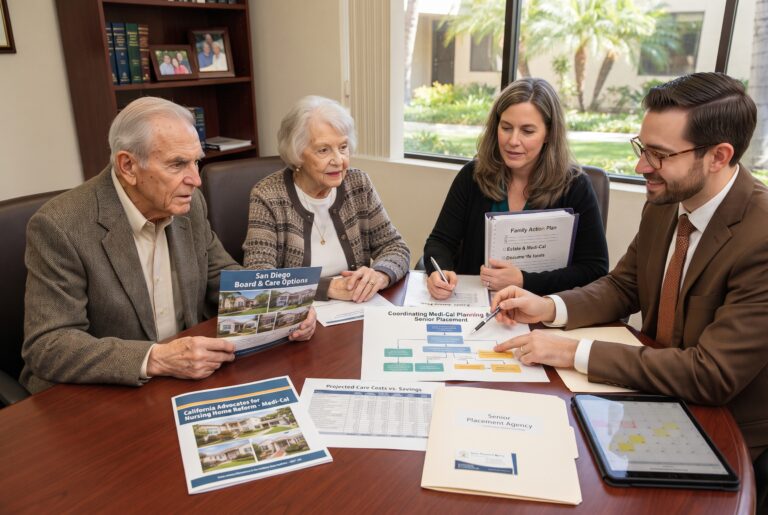
Quick answer: Elder law Medi-Cal planning and assisted living placement work best when coordinated. Because Medi-Cal does not pay...

Quick answer: Many San Diego board and care homes and assisted living communities have caregivers who speak Spanish, Tagalog,...

Quick answer: LGBTQ+ senior living in San Diego should feel safe, affirming and respectful. California law protects LGBTQ+ residents...