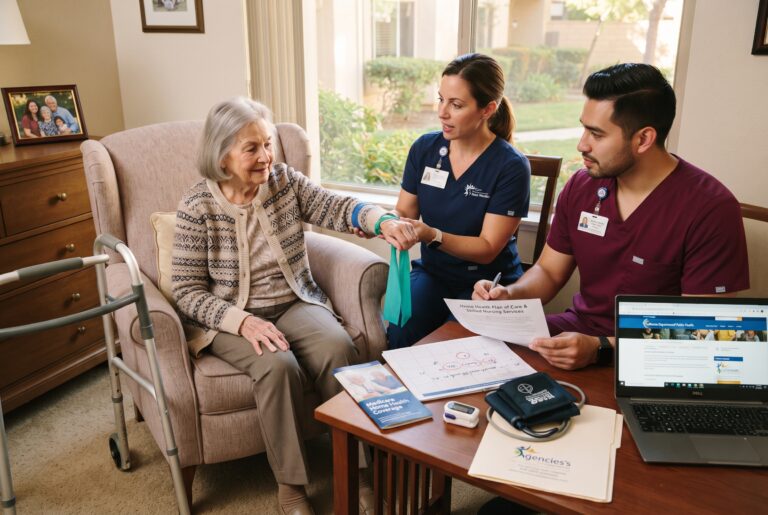
Home Health in Assisted Living: Does Medicare Cover It?
Quick answer: Yes. Medicare home health in assisted living is covered when a resident is homebound, needs intermittent skilled...


Quick answer: IHSS vs assisted living becomes the question when a parent needs more care than In-Home Supportive Services can provide. IHSS pays for up to 283 hours a month of in-home help for the most impaired Medi-Cal members, about nine hours a day. Families can add private caregivers, PACE, or adult day health care, or move to a board and care home. IHSS cannot be used inside a licensed care facility.
IHSS vs assisted living is a decision many San Diego families face when care needs grow faster than approved IHSS hours. Often a son or daughter is the paid IHSS provider, working long days and covering nights for free, until something has to give. This guide explains how many hours IHSS can provide, signs IHSS is no longer enough, every realistic option for filling the gap, why IHSS ends in assisted living and board and care, and how to compare the true cost of staying home with moving to residential care.
In-Home Supportive Services (IHSS) is a California Medi-Cal program that pays for in-home help so older adults and people with disabilities can live safely at home. IHSS can pay for help with:
The recipient chooses the provider, and family members, including adult children, can be paid IHSS providers. In San Diego, IHSS is administered by the County of San Diego Aging and Independence Services.
IHSS hours are set by a county social worker’s assessment of how much time each task takes. Monthly IHSS maximum hours are:
Protective supervision, for people with cognitive impairment who could injure themselves without someone watching, can raise hours toward the maximum. It is approved only when specific criteria are met and a doctor’s certification is provided. Even at the maximum, IHSS cannot cover 24-hour care.
Caregiver burnout is a serious health risk for the caregiver, not just an inconvenience. Our post on caregiver stress covers warning signs, and our guide to warning signs your aging parent needs a senior care home helps families see the bigger picture.
Often, yes. If your parent’s needs have changed since the last assessment, such as after a hospital stay, a fall, or a dementia diagnosis, request a reassessment from your IHSS social worker. Many recipients are underassessed. Before the visit, keep a one-week log of every task and how long it takes, including nighttime help, and have the doctor document cognitive impairment if protective supervision may apply.
No. IHSS is only for people living in their own home. It cannot pay for care in a licensed assisted living community or board and care home, because those facilities are already licensed and paid to provide personal care and supervision. When your parent moves into a licensed residential care facility, IHSS ends.
That is the heart of the IHSS vs assisted living decision: the facility’s monthly fee replaces IHSS, so families should compare the full monthly cost of each path, including the unpaid hours family members are covering.
Add up three numbers for staying home:
For a parent who needs 24-hour supervision, private home care for the hours beyond IHSS can exceed the monthly cost of a San Diego board and care home, where staff are awake and present day and night. Our comparison of home care or a care facility and our guide to assisted living costs in San Diego can help with the math.
A free placement advisor can shortlist homes and arrange tours. Elder Answers offers a free senior care assessment for San Diego County families.
What is the maximum number of IHSS hours in California? 283 hours a month for severely impaired recipients and 195 hours for others.
Can IHSS pay for 24-hour care? No. Even at the maximum, IHSS covers about nine hours a day.
Can my parent keep IHSS in a board and care home? No. IHSS cannot be used in a licensed residential care facility, including board and care and assisted living.
What is IHSS protective supervision? An IHSS service for people with cognitive impairment who need to be watched to stay safe.
Can I get paid as an IHSS provider for my parent? Yes. Family members, including adult children, can be paid IHSS providers.
Does Medi-Cal pay for adult day health care? Yes, through Community-Based Adult Services (CBAS) for eligible members.
IHSS can provide up to 283 hours a month, but it cannot cover 24-hour needs, and it ends when a parent moves into a licensed care home. Request a reassessment if hours seem low, use adult day health or PACE to fill daytime gaps, and compare the real cost of private hours and unpaid family care with a board and care home or assisted living when supervision is needed around the clock.
Quick answer: Yes. Medicare home health in assisted living is covered when a resident is homebound, needs intermittent skilled...
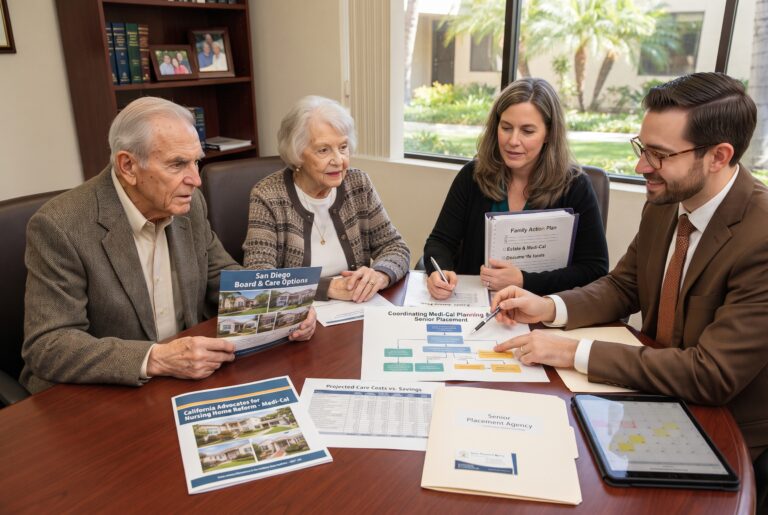
Quick answer: Elder law Medi-Cal planning and assisted living placement work best when coordinated. Because Medi-Cal does not pay...

Quick answer: Many San Diego board and care homes and assisted living communities have caregivers who speak Spanish, Tagalog,...

Quick answer: LGBTQ+ senior living in San Diego should feel safe, affirming and respectful. California law protects LGBTQ+ residents...