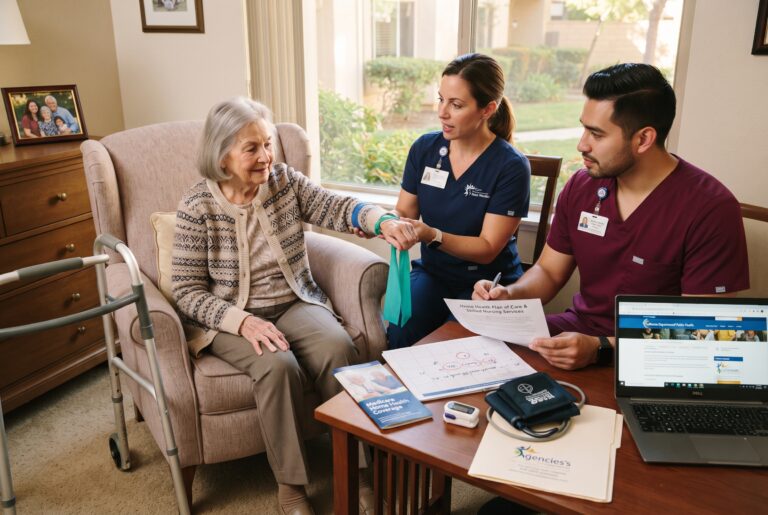
Home Health in Assisted Living: Does Medicare Cover It?
Quick answer: Yes. Medicare home health in assisted living is covered when a resident is homebound, needs intermittent skilled...


San Diego is one of the most expensive places in the country to need senior care, and many families start their search worried there is nothing they can afford. The truth is more hopeful, but it takes planning. Low income assisted living facilities, board and care homes that accept SSI, Medi-Cal programs, VA benefits and county services can be combined to build a realistic plan for an aging parent with limited income.
This guide walks through the main low-income senior care options in San Diego County: what each one is, who qualifies, what it actually pays for, and the trade-offs. It is written for adult children trying to figure out what is possible on a parent’s Social Security or SSI, with a focus on residential care in small board and care homes.
Yes, but they are limited and rarely advertised. In San Diego County, low income assisted living facilities usually means one of three things: small residential senior care homes (board and care homes) that accept residents at the SSI/SSP rate, assisted living settings that take Medi-Cal’s Assisted Living Waiver, or subsidized senior housing paired with in-home help.
The challenge is the gap between income and cost. Private-pay board and care homes in San Diego cost about $5,500 to $9,500 per month in 2026, and assisted living costs about $5,500 to $12,500. A parent living on Social Security or SSI cannot cover those rates alone. The options below fill that gap in different ways:
Some do, and these SSI-rate homes are among the true low income assisted living facilities in the county. California sets a monthly SSI/SSP payment standard for people living in licensed board and care homes, and a limited number of San Diego board and care homes accept residents at that rate. For 2026, DHCS lists that payment standard for an aged individual as $1,626.07 per month, of which the resident keeps a small amount for personal needs.
What families should know about SSI-rate homes:
Your parent must actually receive SSI (based on age 65 or older, blindness or disability, plus low income and assets) for this rate to apply. If your parent’s income is a bit above SSI levels, they may not qualify, and homes may not accept them at the SSI rate.
The Medi-Cal Assisted Living Waiver (ALW) pays for care services in participating assisted living communities and board and care homes for Medi-Cal members who need a nursing-home level of care. The resident still pays room and board, usually from SSI or other income. The ALW is offered in San Diego County, but there is a waitlist.
Key points:
Our deep dive on the Medi-Cal Assisted Living Waiver in San Diego covers eligibility, the waitlist and how to find participating homes. For general Medi-Cal rules, see our Medi-Cal eligibility guide.
For a parent with high care needs and limited funds, a Medi-Cal nursing home may be the most complete coverage available. Medi-Cal pays for long-term care in skilled nursing facilities for those who qualify medically and financially, covering room, board, nursing and personal care, with the resident contributing most of their income as a share of cost.
Who this fits:
Medi-Cal’s financial rules changed for 2026. California reinstated an asset limit for most non-MAGI Medi-Cal programs: $130,000 for a single person, plus $65,000 for each additional household member, with the home generally exempt. Our guide to Medi-Cal countable vs. exempt assets in 2026 explains what counts, and our comparison of Medi-Cal nursing home vs. board and care lays out the trade-offs. Our page on nursing homes in San Diego covers local options.
When low income assisted living facilities have no openings, several San Diego County programs help low-income seniors stay home longer. In-Home Supportive Services (IHSS) pays for in-home help for eligible Medi-Cal members, PACE programs coordinate medical and personal care, and adult day health care provides daytime care and therapy. Together they can delay or avoid a move.
In-Home Supportive Services (IHSS). IHSS pays a caregiver, who can be a family member in many cases, to help eligible Medi-Cal members with personal care and household tasks at home. In San Diego County, IHSS is run by Aging and Independence Services (AIS). The AIS call center is 800-339-4661.
PACE (Program of All-Inclusive Care for the Elderly). PACE serves people 55 and older who need a nursing-home level of care but can live safely in the community within the program’s service area. A PACE team coordinates doctors, a day center, therapy, transportation and in-home help. In San Diego County, programs include St. Paul’s PACE and Gary and Mary West PACE. For people with Medi-Cal, PACE typically has no monthly premium; check service areas by zip code.
Adult day health care. Community-Based Adult Services (CBAS) is a Medi-Cal benefit providing daytime nursing, therapy, meals and activities at licensed centers for eligible members. Our guide to senior day care explains how day programs work.
Caregiver support. Family caregivers can find respite help, counseling and training through local organizations. Our guide to caregiver support in San Diego lists resources.
Yes. Wartime veterans and surviving spouses with limited income and assets may qualify for the VA pension with Aid and Attendance, a monthly benefit that can help pay for board and care, assisted living or in-home care. For a veteran with no dependents, the VA lists a maximum annual pension rate with Aid and Attendance of $29,093 as of December 1, 2025.
Eligibility basics:
Surviving spouses have their own rates. Our guides to veterans assisted living benefits and the VA survivors pension explain how to apply. Use an accredited veterans service officer, which is free, rather than paying anyone to file a VA claim.
Subsidized senior apartments can be a lower-cost alternative to low income assisted living facilities for a parent who is mostly independent. Rent is tied to income, and services such as IHSS, PACE or home health can be brought in. The drawback is long waitlists and no 24-hour supervision, so it works best for seniors who need light help.
Options include:
Because waitlists can run long, apply early and to several properties. Subsidized housing is not a substitute for residential care if a parent needs help at night, has dementia or falls often. Our article on independent living in San Diego covers the broader independent options.
Families with modest savings often combine strategies: using a parent’s home equity, choosing a shared room, picking an inland area with lower rates, applying for VA or Medi-Cal benefits early, and planning a transition from private pay to Medi-Cal-funded care when savings run low. Planning before a crisis gives the most options.
Practical strategies:
For example, a family in Spring Valley might use their mother’s savings to pay for a shared room in a nearby board and care home for two years, apply for the ALW right away, and plan for a participating home if savings run low. This is an illustration, not a specific client story.
Finding low income assisted living facilities and affordable board and care homes in San Diego takes local knowledge. Elder Answers has helped San Diego families for well over a decade, and our advisors personally visit the senior care homes we recommend.
Our help is free to families, because homes pay us after move-in, and your rate does not change. We share information only with the homes you choose. Our guide to working with a placement agency when your parent has Medi-Cal explains how we help Medi-Cal families. Contact Elder Answers to talk through options, or start with our board and care homes in San Diego page.
For a parent who needs 24-hour care and qualifies for SSI, a board and care home that accepts the SSI/SSP rate is often the lowest-cost residential option, though openings are rare. For a parent who can stay home, IHSS, PACE and adult day health care are lower-cost ways to get help.
Regular Medi-Cal does not pay for assisted living room and board. The Medi-Cal Assisted Living Waiver pays for care services in participating homes for eligible members, and the resident pays room and board. Medi-Cal does pay for long-term nursing home care for those who qualify.
For 2026, DHCS lists the SSI/SSP payment standard for an aged individual in a licensed board and care facility as $1,626.07 per month. The resident keeps a small personal needs amount, and the rest goes to the home. Only some homes accept this rate.
Some assisted living communities and board and care homes in San Diego participate in the Medi-Cal Assisted Living Waiver. Participation is limited and there is a waitlist, so apply early through a Care Coordination Agency and confirm openings with each home.
California reinstated an asset limit for most non-MAGI Medi-Cal programs in 2026: $130,000 for a single person, plus $65,000 for each additional household member. The home is generally exempt. Rules are detailed, so confirm with the county or an elder law attorney.
In many cases, yes. Through IHSS, eligible Medi-Cal members can choose a caregiver, often a family member, who is paid by the program. In San Diego County, contact Aging and Independence Services at 800-339-4661 to apply.
The VA pension with Aid and Attendance is paid to the veteran or surviving spouse, who can use it toward board and care, assisted living or in-home care. It does not pay the home directly. Income, net worth and service rules apply.
Be cautious of any elder care home or home for elderly adults with no license, unclear pricing or poor inspection histories. Always check the CDSS license and recent reports, visit in person, and read the admission agreement. Unlicensed homes operating outside the law put residents at real risk.
Quick answer: Yes. Medicare home health in assisted living is covered when a resident is homebound, needs intermittent skilled...
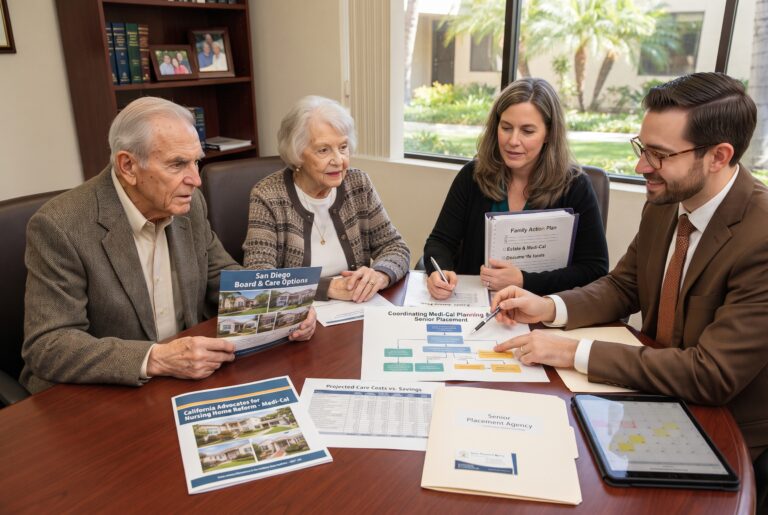
Quick answer: Elder law Medi-Cal planning and assisted living placement work best when coordinated. Because Medi-Cal does not pay...

Quick answer: Many San Diego board and care homes and assisted living communities have caregivers who speak Spanish, Tagalog,...

Quick answer: LGBTQ+ senior living in San Diego should feel safe, affirming and respectful. California law protects LGBTQ+ residents...