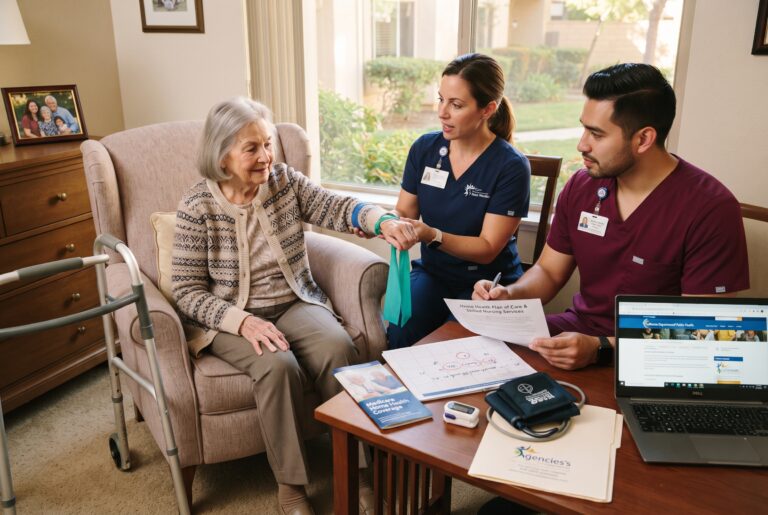
Home Health in Assisted Living: Does Medicare Cover It?
Quick answer: Yes. Medicare home health in assisted living is covered when a resident is homebound, needs intermittent skilled...


For veterans who need long-term care but do not want a nursing home, the VA offers a lesser-known option called a VA medical foster home. In this program, a veteran lives in the private home of a VA-approved caregiver, with round-the-clock supervision and regular visits from a VA home care team. Families in San Diego often hear about it from a VA social worker and want to know how it compares with a licensed board and care home.
This guide explains how a VA medical foster home works, who is eligible, what it costs, how to find out whether a home is available through the VA San Diego Healthcare System, and how it compares with board and care homes in San Diego for veterans and their families. Program availability varies by location, so the most reliable source on local openings is always the VA itself.
A VA medical foster home is a private home where a trained caregiver provides 24-hour care and supervision to a small number of veterans, usually no more than three. The VA inspects and approves the home, and the veteran receives medical care through VA Home Based Primary Care, whose team visits the home regularly. The veteran pays the caregiver directly.
The VA describes medical foster homes as an alternative to nursing home care for veterans who need that level of help but prefer a family-style setting. Typical features include:
The caregiver usually lives in the home and is responsible for the veteran’s daily care, with a backup plan for relief caregivers.
To live in a VA medical foster home, a veteran must be enrolled in VA health care and in VA Home Based Primary Care, must need a level of care that makes a medical foster home appropriate, and a home must be available in the area. A VA social worker or care team decides whether the program is a good fit.
Common characteristics of veterans in the program:
Eligibility rules and availability can vary by VA medical center. The first step is to talk with the veteran’s VA primary care team or social worker.
The VA has medical foster home programs at many medical centers, but not every VA system has one, and the number of homes in each area changes. We could not confirm current San Diego program details from public VA sources. Families should ask the VA San Diego Healthcare System directly whether medical foster homes are available locally and how to be referred.
How to ask:
Because VA medical foster homes are limited in number, many San Diego veterans end up comparing the program with licensed board and care homes, which are widely available across the county.
The veteran generally pays the medical foster home caregiver directly, and the VA does not typically pay for the room, board and personal care. The VA estimates the cost at about $1,500 to $3,000 a month, depending on the veteran’s income and level of care, with the amount agreed with the caregiver in advance.
Points to understand:
For comparison, board and care homes in San Diego typically cost about $5,500 to $9,500 a month in 2026, with private rooms often $1,000 to $2,000 more than shared rooms. For veterans who can access a medical foster home, cost can be a major advantage.
Both a VA medical foster home and a board and care home offer small, home-like care with 24-hour supervision. The main differences are who oversees them, how many residents live there, how medical care is provided, cost and availability. Medical foster homes are VA-approved and usually cheaper; board and care homes are state-licensed and far more available.
Oversight
Size
Medical care
Cost and availability
For a full overview of small homes, read our guide to board and care homes in San Diego.
A board and care home may be the better choice when no VA medical foster home is available, when a veteran and spouse want to live together, when the veteran wants to keep non-VA doctors, or when the family needs a move quickly after a hospital stay. Board and care homes also offer more choice of location and specialties such as dementia care and hospice.
Situations that often favor a board and care home:
Families sometimes start with a board and care home while waiting for a VA medical foster home opening, or choose board and care after comparing both. Our guide to board and care, personal care homes and adult foster care explains how the terms overlap.
Medical foster homes are one of several VA long-term care programs. Depending on eligibility and service-connected disability, veterans may also qualify for VA community living centers, contract nursing home care, State Veterans Homes, home care services, adult day health care or pension with Aid and Attendance.
Programs to ask the VA about:
For San Diego military families, our guide to senior care near Camp Pendleton and Naval Base San Diego lists more local resources.
Whether you are considering a VA medical foster home or a board and care home, ask about the caregiver’s experience, backup coverage, how medical care is coordinated, what the monthly cost includes and what happens if care needs increase. Visit in person and, if possible, meet the main caregiver.
Questions for a VA medical foster home:
Questions for a board and care home:
If a VA medical foster home is not available or not the right fit, Elder Answers can help you find a licensed board and care home that works for a veteran. We have helped San Diego families for well over a decade, and our advisors personally visit the homes we recommend, including homes near VA facilities and military bases.
Our help is free for families because homes pay us after a move-in, and your rate does not change. We share your information only with homes you choose, and when the need is urgent, moves can often happen within a few days. Contact Elder Answers to compare board and care options while you explore VA programs.
A VA medical foster home is a private home where a VA-approved caregiver provides 24-hour care to a small number of veterans, usually no more than three. The veteran receives medical care through VA Home Based Primary Care and pays the caregiver directly for room, board and personal care.
Generally, the veteran pays the caregiver directly, and the VA provides the medical care through Home Based Primary Care. The VA estimates costs at about $1,500 to $3,000 a month depending on income and care needs. Ask the VA whether any financial help applies to your situation.
Availability changes, and we could not confirm current San Diego program details from public sources. Ask the veteran’s VA primary care team or social worker at the VA San Diego Healthcare System whether medical foster homes are available locally.
The veteran must be enrolled in VA health care and Home Based Primary Care, need a level of care that fits the program, and have an approved home available. A VA social worker or care team decides whether the program is appropriate.
A medical foster home is VA-approved, usually houses up to three veterans and centers on VA home care visits. A board and care home is licensed by the California Department of Social Services, usually houses about 6 residents and is widely available across San Diego County.
Medical foster homes are designed for veterans, and policies on spouses vary. Ask the VA coordinator. Many board and care homes in San Diego accept couples if both need care.
Yes. VA pension with Aid and Attendance and VA disability compensation are paid to the veteran, who can use them toward the cost of a medical foster home, board and care home or assisted living.
Ask the VA about other long-term care programs, such as community nursing homes, home care and pension benefits. Many families choose a licensed board and care home, which offers a similar small-home setting and can often accept a veteran within days.
Quick answer: Yes. Medicare home health in assisted living is covered when a resident is homebound, needs intermittent skilled...
Quick answer: Elder law Medi-Cal planning and assisted living placement work best when coordinated. Because Medi-Cal does not pay...

Quick answer: Many San Diego board and care homes and assisted living communities have caregivers who speak Spanish, Tagalog,...

Quick answer: LGBTQ+ senior living in San Diego should feel safe, affirming and respectful. California law protects LGBTQ+ residents...