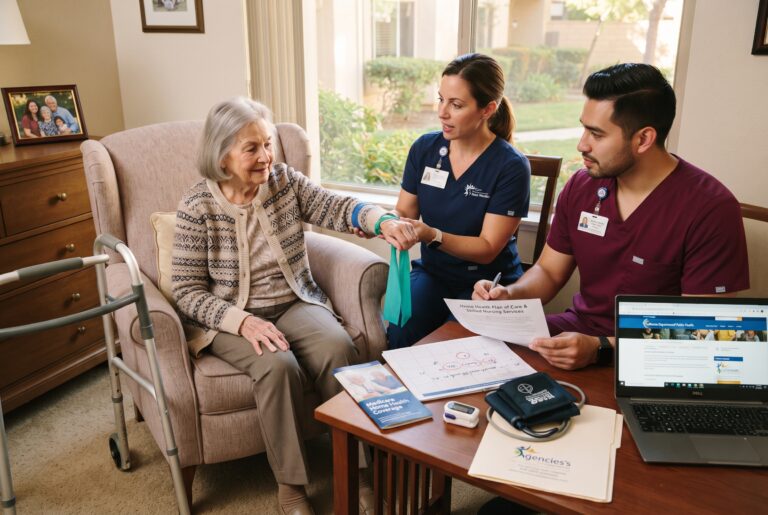
Home Health in Assisted Living: Does Medicare Cover It?
Quick answer: Yes. Medicare home health in assisted living is covered when a resident is homebound, needs intermittent skilled...


Quick answer: A reverse mortgage can help pay for senior care while the borrower still lives at home, for example to fund in-home care or home modifications. It usually does not work for paying assisted living long term, because the loan generally becomes due when the last borrower has been out of the home for 12 consecutive months for health reasons. It can still help when a spouse stays in the home.
Reverse mortgage and assisted living questions come up constantly in San Diego, where many seniors are house-rich and cash-poor. A home bought decades ago may now be worth well over a million dollars, while monthly income barely covers the property tax. This guide explains how reverse mortgages work, why they rarely fit a permanent move to assisted living, the situations where they do help, how they affect spouses and Medi-Cal, and what alternatives San Diego families often use instead.
A reverse mortgage lets homeowners 62 and older borrow against home equity without making monthly mortgage payments. Instead, interest and fees are added to the loan balance over time. The loan is repaid, usually by selling the home, when the last borrower dies, sells, or permanently moves out.
The most common type is the Home Equity Conversion Mortgage (HECM), insured by the Federal Housing Administration. Proprietary or “jumbo” reverse mortgages from private lenders are available for higher-value homes.
The HECM maximum claim amount is $1,249,125. That is the highest home value FHA will use to calculate loan proceeds, not the loan amount itself. The amount a borrower can actually access depends on:
Older borrowers and lower interest rates generally mean more available proceeds. Funds can be taken as a lump sum, monthly payments, a line of credit, or a combination.
Usually not for long. A HECM requires the home to be the borrower’s principal residence. If the last remaining borrower is away from the home for more than 12 consecutive months because of physical or mental illness, including a stay in assisted living, a board and care home or a nursing home, the loan generally becomes due and payable.
That means a single parent who moves permanently into assisted living in San Diego will usually need to repay the loan, typically by selling the home, within about a year. A reverse mortgage taken out right before such a move often costs more in fees than it delivers in benefit.
A reverse mortgage can be a useful tool in several situations:
If both spouses are borrowers and one moves into a care facility, the loan stays in place as long as the other borrower lives in the home as a principal residence.
If the spouse at home is not on the loan, called an eligible non-borrowing spouse, HECM rules may allow them to remain in the home after the borrower dies or permanently moves out, as long as they meet the requirements and were disclosed at closing. The loan becomes due when the non-borrowing spouse leaves or dies. Confirm the exact protections in the loan documents.
All HECM borrowers must complete counseling with a HUD-approved counselor before closing, which is a good chance to ask about care plans.
Reverse mortgage proceeds are loan proceeds, not income. Money spent in the month it is received generally does not affect eligibility, but funds kept in a bank account can count as an asset under the Medi-Cal asset limit, which California reinstated at $130,000 for an individual. Coordinate the timing with an elder law attorney. Our Medi-Cal eligibility guide covers the general rules.
When a parent is moving permanently, families often choose instead to:
Choosing a smaller board and care home in San Diego can also lower monthly costs enough to change the math. Our financial planning guide for senior care walks through these decisions.
Many San Diego seniors took out a reverse mortgage years ago, and the family only learns about it when a move becomes necessary. If that is your situation:
Contact the servicer early and keep notes of every call. Servicers deal with these situations often and can explain the timelines that apply to your parent’s loan.
These hypothetical examples show when a reverse mortgage and assisted living fit together, and when they do not.
A widowed mother in Clairemont. She owns her home free and clear but has modest Social Security income. After several falls, her doctor recommends 24-hour supervision. A reverse mortgage would come due about a year after she moves into a board and care home, and its upfront costs would eat into her equity. Instead, the family rents out her house and uses the rent plus her income toward a small board and care home nearby. They revisit the decision each year.
A married couple in Escondido. The husband has Alzheimer’s and needs memory care. The wife, also a borrower, plans to stay in their home. Because she still lives there as her principal residence, a reverse mortgage line of credit can help pay for her husband’s care without forcing a sale. They meet with an elder law attorney first to coordinate the plan with Medi-Cal rules.
A father in El Cajon who wants to stay home. He needs help with bathing, meals and medications but is safe at night. A reverse mortgage line of credit pays for daytime caregivers and a walk-in shower. Two years later, when he needs more care, the family uses the remaining line of credit to bridge the first months in a board and care home while the house sells.
Before using home equity, compare what each care path costs over time. In 2026, board and care homes in San Diego typically cost about $5,500 to $9,500 a month, assisted living about $5,500 to $12,500, and memory care about $7,500 to $14,000. Round-the-clock in-home care often costs more than any of these once nights are covered.
A reverse mortgage that pays for a few hours of daily help at home can be a good use of equity. A reverse mortgage that pays for 24-hour in-home care can drain equity quickly, and the family may still need a care facility later. Ask how many months or years of care the available proceeds would cover in each setting before you decide. Our guide to assisted living costs in San Diego explains what monthly rates include.
When a parent is moving permanently, the two most common alternatives to a reverse mortgage are selling and renting. Each has trade-offs:
Selling the home provides a lump sum that can pay for years of care, removes the burden of maintenance, and simplifies the estate. It may trigger capital gains questions and can affect Medi-Cal eligibility, since cash from a sale counts as an asset.
Renting the home keeps the property in the family and creates monthly income. It also means managing tenants, repairs and vacancies, often from a distance. Rental income counts as income for Medi-Cal purposes.
Taxes, Proposition 13 property tax basis, the capital gains exclusion for a primary residence and the step-up in basis heirs may receive all affect which choice is best. Talk with a tax professional and an elder law attorney before deciding.
Bring these questions to the required HUD-approved counseling session, and ask a senior care placement advisor for realistic local care costs before you meet.
Only briefly in most cases, because the loan usually comes due after the last borrower is out of the home for 12 consecutive months. It works better when a spouse stays in the home as a borrower.
The 2026 HECM maximum claim amount is $1,249,125, the highest home value used to calculate proceeds. The amount a borrower can actually receive is lower and depends on age, interest rates and any existing mortgage.
If the other spouse is a borrower living in the home, the loan stays in place. An eligible non-borrowing spouse may also have protections, so review the loan documents.
Yes. Proceeds can fund caregivers, home modifications and adult day care while your parent lives at home.
Proceeds are not income, but unspent funds can count as assets under the Medi-Cal asset limit. Coordinate the timing of draws with an elder law attorney.
Heirs are not personally liable. The loan is usually repaid by selling the home, and heirs can keep the home by paying the balance or 95% of appraised value, whichever is less.
Yes, but usually only for a short time. The 12-month rule applies to board and care homes the same way it applies to assisted living. A reverse mortgage works best for board and care when a spouse stays in the home or when existing credit bridges the time until the house sells.
It depends on your parent’s care needs, the home’s value, taxes, Medi-Cal plans and how much work the family can take on. Selling provides a lump sum, while renting creates monthly income. A tax professional and an elder law attorney can help compare the options.
The loan generally becomes due after the last borrower has been out of the home for more than 12 consecutive months. Keep paying property taxes and insurance, contact the servicer, and plan for the home’s sale. Heirs are not personally liable for any shortfall.
A reverse mortgage can fund in-home care, home modifications, or care for one spouse while the other stays home. It rarely works as a long-term way to pay for assisted living for a single parent, because the loan usually comes due after 12 months out of the home. Get HUD-approved counseling, check spouse protections, coordinate with Medi-Cal planning, and compare selling, renting, or a bridge loan. A free senior care assessment can help clarify which care setting the budget supports.
Quick answer: Yes. Medicare home health in assisted living is covered when a resident is homebound, needs intermittent skilled...
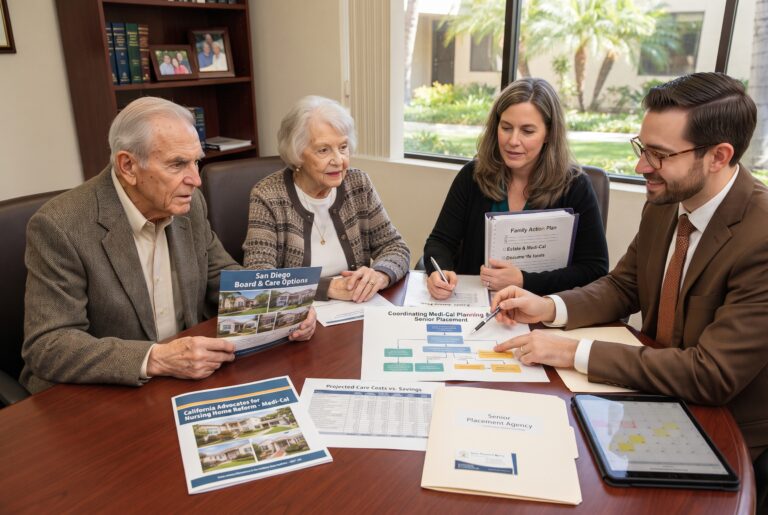
Quick answer: Elder law Medi-Cal planning and assisted living placement work best when coordinated. Because Medi-Cal does not pay...

Quick answer: Many San Diego board and care homes and assisted living communities have caregivers who speak Spanish, Tagalog,...

Quick answer: LGBTQ+ senior living in San Diego should feel safe, affirming and respectful. California law protects LGBTQ+ residents...